Deer are some of the most familiar wild animals in forests, fields, and sometimes even near cities. They often look gentle and harmless, but don’t be fooled—deer have many ways to defend themselves from threats. Every part of their body and behavior helps them avoid danger.
Knowing how deer protect themselves gives us a new respect for these graceful creatures. Let’s explore how deer survive in a world full of predators.
Natural Camouflage
Deer are born with natural camouflage. Their fur is usually brown, tan, or gray, which helps them blend into their surroundings. In spring and summer, their coats are reddish-brown, matching the colors of trees and grass. In winter, their fur turns grayish, making them hard to spot in snowy or leafless areas.
Young fawns have white spots on their backs. These spots look like sunlight breaking through leaves, making it harder for predators to see them when they lie still in tall grass. Camouflage is a deer’s first line of defense—many predators walk by without even noticing them.
Speed And Agility
Deer are fast runners. Most species can reach speeds of 30 to 40 miles per hour (about 48 to 64 kilometers per hour) for short distances. This speed helps them escape from predators like wolves, coyotes, and mountain lions.
But speed is not their only skill. Deer are also very agile. They can change direction quickly and leap high fences or fallen trees in a single bound. Some deer, like the white-tailed deer, can jump as high as 10 feet (about 3 meters) and as far as 30 feet (about 9 meters) in one leap.
Here’s a quick comparison of deer speed and jump ability:
| Species | Top Speed (mph) | Jump Height (ft) | Jump Distance (ft) |
|---|---|---|---|
| White-tailed Deer | 35 | 10 | 30 |
| Mule Deer | 45 | 8 | 15 |
| Red Deer | 40 | 6 | 20 |
These skills make it very difficult for predators to catch them.
Acute Senses
Deer have excellent hearing, smell, and vision. Their large, moveable ears can detect even the slightest noise from far away. Deer often swivel their ears in different directions to listen for danger.
Their sense of smell is even more impressive. Deer can smell predators from hundreds of meters away. This helps them avoid dangerous areas, especially when the wind is in their favor.
While deer’s eyesight is not as sharp as a human’s, they can see well in low light. This is important because they are most active at dawn and dusk, when many predators hunt.
Group Living And Communication
Many deer species live in groups, called herds. Living in a herd has many benefits. More eyes and ears mean it’s harder for predators to sneak up on them.
Deer also have unique ways to warn each other. For example, when a white-tailed deer senses danger, it raises its tail to show the white underside. This “flagging” signals other deer to run. Some species stomp their feet or snort loudly to alert others in the group.
Here’s how deer communicate danger:
- Flagging: Showing the white underside of the tail
- Stomping: Hitting the ground with a hoof
- Snorting: Making a loud warning sound
These signals can save many lives in a herd.

Defensive Antlers And Hooves
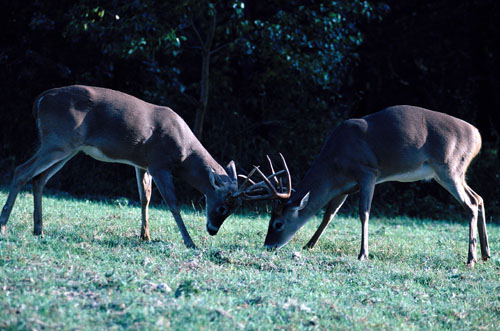
Male deer, known as bucks, grow antlers each year. While antlers are mostly used to fight other males for mates, they are also a powerful defense against predators. Bucks can use their antlers to charge and stab at threats.
Even female deer, which usually lack antlers, can defend themselves. Both males and females have strong, sharp hooves. When cornered, a deer may rear up and strike with its front hooves. A well-aimed kick can injure or even kill a predator.
There are cases where deer have defended themselves from dogs, wolves, and even humans using their hooves.
Use Of Environment
Deer are experts at using their environment for protection. They know the safest routes in their territory and often stay close to thick forests, swamps, or dense brush. These areas give them cover and make it hard for large predators to chase them.
During the day, deer often rest in hidden spots with good visibility. They pick places where they can see or smell danger coming from a distance. If threatened, they have several escape paths planned.
Here’s a look at how deer choose safe locations:
| Environment | Protection Level | Common Predators Avoided |
|---|---|---|
| Dense Forest | High | Wolves, Coyotes |
| Swamps/Marshes | Medium | Large Cats |
| Open Fields | Low | Humans, Dogs |
Choosing the right hiding spot is a skill learned from a young age.
Unusual Defense Tactics
Most people think deer only run away, but there are some less obvious ways deer defend themselves:
- Freezing: Sometimes, a deer will stand completely still when it senses danger. This makes it harder for predators to see them, especially with their camouflage.
- Swimming: Many deer can swim well. If chased, they may cross rivers or lakes to escape. Not all predators are strong swimmers.
- Shedding Scent: Deer often bed down in spots with swirling winds, which help spread their scent and confuse predators tracking them.
One surprising fact: In rare cases, mother deer have been known to charge at predators, especially if their fawns are threatened. This bold move can scare away smaller animals.
Common Mistakes People Make When Observing Deer Defense
Many people believe deer are completely helpless, but this isn’t true. Here are some common misunderstandings:
- Thinking deer only run—they also fight back.
- Believing fawns are easy targets—many survive thanks to their spots and stillness.
- Assuming deer can’t cross water—many species are strong swimmers.
- Forgetting about group warnings—herd behavior saves lives.
Understanding these facts helps us appreciate deer’s survival skills.

Frequently Asked Questions
How Do Deer Sense Danger?
Deer use their hearing, smell, and vision to detect threats. Their large ears pick up sounds, their noses catch scents, and their eyes see well in low light.
Do Deer Attack Predators?
While deer prefer to run away, they will defend themselves if cornered. Bucks use their antlers, and all deer can kick hard with their hooves.
How Do Baby Deer Avoid Predators?
Fawns rely on camouflage and stillness. Their spotted coats and habit of lying motionless make them almost invisible to many predators.
Can Deer Swim To Escape Danger?
Yes, many deer species are excellent swimmers. They often cross rivers or lakes to get away from predators that can’t swim well.
What Should You Do If You See A Deer Defending Itself?
It’s best to stay back and not interfere. A cornered deer can be dangerous, especially if it feels threatened or if fawns are nearby.
Deer may seem gentle, but they are smart survivors with many ways to protect themselves. Their mix of speed, senses, teamwork, and the environment keeps them safe in a world full of threats. To learn more about deer and their defenses, check out this detailed Wikipedia guide on deer behavior. Whether in the wild or just observing from afar, remember that every deer is a master of survival.

