
Birds fascinate us with their songs, colors, and flights, but one of their most impressive skills is building nests. A bird’s nest is not just a simple pile of twigs. It’s a carefully designed structure, created using materials from the bird’s environment and shaped by instinct, experience, and sometimes even teamwork.
For many people, the process seems like a mystery. How do birds know what to do? Why do nests look so different from one species to another? And how do tiny beaks and claws create something strong enough to protect eggs and chicks?
Let’s explore the world of bird nests and understand each step, from the first piece of grass to the final cozy home.
Why Do Birds Build Nests?
Nests are more than just beds for eggs. For birds, a nest is a safe haven. It protects their eggs and chicks from weather, predators, and other dangers. Some birds use the same nest every year, while others build a new one each season. The main reasons birds build nests are:
- Protection: Shields eggs and chicks from rain, wind, and sun.
- Safety from predators: Hides young birds from animals like snakes, cats, or crows.
- Egg incubation: Keeps eggs at a stable temperature until they hatch.
- Raising young: Offers a secure place for parents to feed and care for chicks.
How Do Birds Choose Where To Build?
The location of a nest is as important as its design. Birds have different strategies for choosing the right spot:
- Camouflage: Many birds pick places where the nest blends in with the surroundings, like thick bushes or tree branches.
- Height: Some birds build high up to avoid ground predators, while others nest on the ground for easy access to food.
- Water proximity: Water birds, like ducks or herons, often nest near lakes or rivers.
- Human structures: Swallows and pigeons may use buildings, bridges, or even traffic lights.
One non-obvious fact: Some birds actually watch other birds to learn good nesting spots. If a nest survives one season, other birds may copy the location the next year.
Materials Birds Use For Building Nests
Birds are excellent recyclers. They use what is available nearby. Here are common materials:
- Twigs and sticks: Give nests shape and support.
- Grass and leaves: Provide softness and insulation.
- Mud: Acts as glue or wall material, especially for swallows and robins.
- Feathers and fur: Make the nest warm for eggs and chicks.
- Moss and lichens: Help with camouflage and moisture control.
- Spider silk: Used by some small birds to bind parts of the nest, making it flexible and strong.
- Man-made items: String, yarn, paper, and even plastic can end up in nests, especially in cities.
It’s important to note that not all birds use the same materials, even if they live in the same area. Each species has its own preferences, often passed down through generations.
The Step-by-step Nest Building Process
Let’s look at how most birds actually build their nests, stage by stage:
1. Clearing The Area
Some birds start by removing leaves or debris from their chosen site. This makes space for the nest and helps avoid attracting predators with too much mess.
2. Gathering Materials
Birds collect materials one piece at a time. They often fly back and forth many times—sometimes hundreds of trips. Larger birds can carry bigger items, but small birds are limited to what they can hold in their beaks.
3. Placing The Foundation
The first layer is the base. Birds arrange sticks, twigs, or mud in a rough shape. They may use their bodies, feet, and beaks to press materials down and make sure the base is stable.
4. Weaving And Shaping
This is where things get interesting. Birds like finches and weavers use their beaks to weave grass and fibers together, almost like sewing. They may push, pull, or twist materials, working from the outside in. The nest slowly takes its final shape—round, cup, or dome-shaped.
5. Adding Insulation
Once the main structure is ready, birds line the inside with soft materials. Feathers, moss, or even fur from other animals make the nest comfortable and warm for eggs.
6. Maintenance And Repairs
During the nesting period, birds may fix or add to the nest. Rain, wind, or animal visitors can damage it, so birds keep materials nearby for repairs.

Types Of Bird Nests: Shapes And Examples
Different birds build different nest types. The shape depends on the bird’s size, habits, and environment. Here are the most common types:
1. Cup Nests
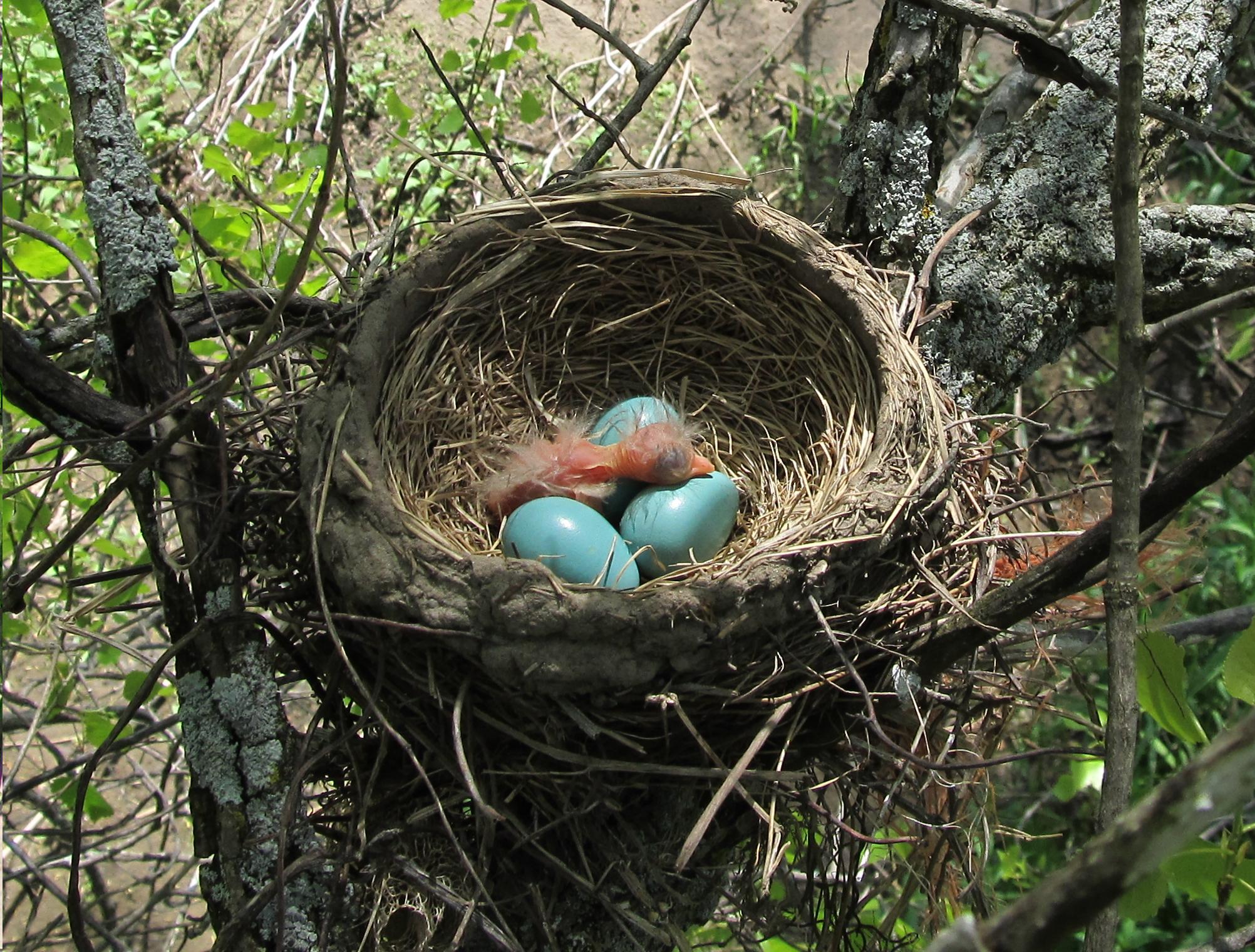
These are the classic, bowl-shaped nests you often see in trees or shrubs. Robins and finches are famous for building cup nests. The outer part is made of twigs and grass, while the inside is lined with softer material.
2. Platform Nests
Larger birds, like eagles and ospreys, build flat nests on tree branches, cliffs, or man-made platforms. These nests can be very large—an eagle’s nest may be over 2 meters wide and weigh a ton.
3. Cavity Nests
Some birds, like woodpeckers and bluebirds, nest inside holes in trees or walls. They may dig their own hole or use one made by another animal. Cavity nests protect eggs from most weather and predators.
4. Pendant Nests
These are hanging nests, often shaped like a sock or bag. Orioles and weaver birds are known for pendant nests, which swing from the tips of branches. The entrance is often at the bottom, making it hard for predators to reach.
5. Dome Nests
Dome nests have a roof and a side entrance, offering extra protection. Wrens and some warblers make these from grass, moss, and leaves.
6. Ground Nests
Birds like plovers and some ducks make simple scrapes on the ground, sometimes adding bits of grass or pebbles. Camouflage is key—they often choose places where the eggs blend in perfectly.
7. Mound Nests
Some birds, like the Australian malleefowl, pile up leaves, dirt, and sand to create a mound. The heat from decomposing material helps incubate the eggs.
8. Burrow Nests
Kingfishers and puffins dig tunnels in riverbanks or cliffs. The nest is at the end of the tunnel, safe from most animals.
9. Simple Scrapes
Some shorebirds make only a shallow depression in sand or gravel, relying on camouflage instead of a built structure.
10. Floating Nests
Grebes and some ducks build nests that float on water, anchored to plants. This keeps eggs safe from land predators.
How Different Birds Build Nests: Species Examples
To see how unique nest-building can be, let’s look at a few well-known birds:
American Robin
Robins build classic cup nests using mud, grass, and twigs. They press the mud into shape with their breast and line the inside with soft grass. The process takes 2-6 days.
Weaver Bird
Weaver birds are famous for their skill. Males weave fresh grass into hanging, woven balls, sometimes with a long entrance tube. It’s a complex process and can take up to a week. If the female doesn’t like the nest, she will reject it, and the male will build another.
Bald Eagle
Eagles use large sticks and branches to create massive platform nests. They add to the same nest each year. Some nests are over 4 meters deep!
Woodpecker
Woodpeckers carve holes in dead trees using their strong beaks. They don’t add much nesting material—just wood chips at the bottom.
Hummingbird
Hummingbirds create tiny cup nests, often the size of a walnut. They use plant down, moss, and spider silk to bind everything together. The nest stretches as the chicks grow.
Emperor Penguin
This is a special case. Emperor penguins do not build nests. Instead, the male balances the egg on his feet under a flap of skin for warmth.
Tools Birds Use: Beaks, Feet, And More
Birds don’t have hands, but they are expert builders. Here’s how they use their bodies:
- Beak: Main tool for picking up, carrying, and arranging materials. Some birds use it like a needle to sew or weave.
- Feet: Used for holding and pressing down materials. Birds like starlings use their feet to stamp the nest into shape.
- Body: Birds may use their breast or belly to mold the nest, especially when making a cup shape.
- Saliva: Some birds, like swifts, use sticky saliva to glue the nest together.
One detail people often miss: Some birds use their sense of touch in their beaks to “feel” if the nest is strong enough.
Nest Building: Instinct Or Learning?
Most birds are born with the basic instinct to build nests, but learning also plays a role. Young birds watch their parents and may practice with small objects. Some birds improve over time, making better nests as they get older.
A non-obvious insight: In some species, only the male or only the female builds the nest. In others, both work together.
Bird Nests And The Environment
Birds are sensitive to changes in their surroundings. The availability of materials, weather patterns, and even pollution can affect how and where they build. For example, city birds often use trash and string, which can sometimes be dangerous to their chicks.
Climate change is also affecting nesting times and success in some regions.
Here’s a comparison of common materials found in urban versus rural bird nests:
| Material | Urban Nests | Rural Nests |
|---|---|---|
| Grass | Common | Very Common |
| Twigs | Common | Very Common |
| Plastic | Common | Rare |
| String/Yarn | Common | Rare |
| Moss | Rare | Common |
Dangers And Challenges During Nest Building
Building a nest is not always easy. Birds face many challenges:
- Predators: Squirrels, snakes, cats, and other birds may attack nests.
- Bad weather: Heavy rain or wind can destroy a half-finished nest.
- Human disturbance: Cutting trees or clearing bushes can remove nest sites.
- Competition: Other birds may steal nest material or try to take over a nest.
Birds must work quickly and quietly to avoid drawing attention.
Bird Nests Around The World: Unique Examples
Some birds build nests that are truly one of a kind. Here are a few:
Sociable Weaver (africa)
These birds make the largest nests in the world. A single nest can house hundreds of birds and last for decades. It looks like a giant haystack in a tree.
Edible-nest Swiftlet (asia)
These birds make their nests almost entirely from hardened saliva. People harvest these nests for bird’s nest soup, an expensive delicacy.
Horned Coot (south America)
Horned coots pile stones in lakes to create a base, then build a nest on top. Some platforms weigh over 1,500 kilograms.
Tailorbird (asia)
Tailorbirds “sew” leaves together with spider silk or plant fibers, making a cradle for their eggs between two leaves.
Comparing Nest Types: Strength, Safety, And Comfort
How do different nest types compare? Here’s a quick look:
| Nest Type | Strength | Safety | Comfort |
|---|---|---|---|
| Cup | Medium | Medium | High |
| Platform | High | High | Medium |
| Pendant | Medium | High | Medium |
| Ground | Low | Low | Medium |
| Cavity | High | Very High | High |
| Mound | High | Medium | Medium |

How Long Does It Take To Build A Nest?
The time needed depends on the bird and the nest style. Here’s a comparison:
| Bird Species | Nest Type | Build Time (Days) |
|---|---|---|
| American Robin | Cup | 2–6 |
| Bald Eagle | Platform | 5–14 (repairs each year) |
| Weaver Bird | Pendant | 3–7 |
| Hummingbird | Cup | 5–7 |
| Sociable Weaver | Massive communal | Months (expanded yearly) |
What Happens After The Nest Is Built?
After the nest is done, the female usually lays eggs. Both parents may take turns keeping the eggs warm (incubating). After hatching, parents feed and protect the chicks until they are ready to leave, a process called “fledging. ” Some birds clean the nest by removing eggshells and droppings to keep it healthy.
A detail often missed: Some birds destroy or abandon their nests after the chicks leave, to avoid attracting parasites or predators in the future.
Human Impacts And Conservation
Human activity can help or harm birds’ ability to build nests. Planting native trees and shrubs provides more sites and materials. On the other hand, cutting down trees, using pesticides, or pollution can make nesting harder or more dangerous. Birdhouses (nest boxes) can help some species that have lost natural sites.
If you find a bird nest, it’s best to leave it alone. Moving or touching nests can scare parents away or attract predators. In many places, it’s illegal to disturb active nests.
For more about bird behavior and conservation, you can check resources like the Wikipedia Bird Nest article.
Frequently Asked Questions
How Do Birds Know How To Build Nests?
Birds use a mix of instinct and learning. Instinct tells them the basic steps, but experience and watching other birds help them improve.
Do All Birds Build Nests?
No. Some birds, like penguins and nightjars, do not build traditional nests. They may use their feet, bodies, or just lay eggs on bare ground.
Can Humans Help Birds With Nesting?
Yes. Planting native plants, leaving safe materials like wool or twigs, and setting up birdhouses can help. But avoid using materials that can harm birds, like plastic or string.
Why Do Some Birds Use Trash In Their Nests?
In cities, birds adapt to what’s available. They may use plastic, yarn, or paper because natural materials are harder to find. Sometimes, this can be dangerous for chicks.
What Should I Do If I Find A Nest In My Yard?
It’s best to leave the nest alone. Avoid touching it or getting too close, as this can stress the parent birds or attract predators.
Birds’ ability to build nests is a mix of nature’s engineering, creativity, and adaptation. Every nest tells a story—not just of survival, but of a bird’s place in the world. Understanding how birds build nests helps us appreciate the effort behind every chirp and flutter in our gardens and forests.

