
The best mirrorless cameras for landscapes deliver detail, dynamic range, and rugged build.
You plan a sunrise hike. The sky turns pink. Your phone struggles with shadows and highlights. That is when a good mirrorless camera saves the shot. It packs a big sensor, strong dynamic range, and sharp glass. It handles wind, dust, and cold. It gives you crisp edges and rich color. If you want the Best Mirrorless Cameras for Landscape Photography, I break down the top picks below and share real use tips.
Canon EOS RP + RF 24-105mm Kit

The Canon EOS RP brings full-frame quality in a light body. It is easy to pack for long hikes and flights. The 24-105mm kit lens covers wide scenes to short tele frames. Colors look rich, and skin tones stay natural for people in the scene.
This kit is friendly for new users who want a big sensor. The menus are clear. The grip feels good even with gloves. For landscapes, you can stop down for corner to corner sharpness and get very solid results.
Pros:
- Light full-frame body for travel and hikes
- Good color science for sunrise and sunset tones
- Useful 24-105mm range for wide to short tele shots
- Simple menu and controls, great for beginners
- Strong value entry into full-frame RF mount
Cons:
- No in-body stabilization for handheld stills
- Modest battery life; bring a spare
- Dynamic range is good, not class leading
My Recommendation
The EOS RP kit is best for travelers and beginners who want full-frame depth without weight. If you hike or shoot cityscapes and want easy color, this camera works. It is not the most advanced, but it nails the basics. For many, it is a budget path into the Best Mirrorless Cameras for Landscape Photography category and a fine place to start.
| Best for | Why |
|---|---|
| Beginners moving to full-frame | Easy controls and great value |
| Travel landscapes | Light body and flexible 24-105mm range |
| Casual tripod shooters | Full-frame quality when stopped down |
Canon EOS R7 (Body Only)

The Canon EOS R7 offers a 32.5MP APS-C sensor with rich detail. It has in-body stabilization that helps when you shoot handheld at dusk. The body feels sturdy and fits nicely in the hand. It is a solid bridge between hobby and pro use.
For landscapes, the pixel density helps with fine textures like rocks and leaves. The autofocus is fast for wildlife too, which is a bonus on hikes. Colors look true, and files respond well to editing. If you want one camera for many tasks, the R7 is a strong pick.
Pros:
- High resolution APS-C sensor for fine detail
- In-body stabilization helps at low ISO
- Fast autofocus for wildlife on the trail
- Good ergonomics and control layout
- Deep lens support in RF and RF-S
Cons:
- APS-C depth of field is deeper vs full-frame
- Weather sealing is good, not flagship level
- Needs quality glass to get the best detail
My Recommendation
The R7 is great for hikers who shoot landscapes and wildlife. It balances speed and detail and stays light. If you want the Best Mirrorless Cameras for Landscape Photography without going full-frame, this is a fine choice. Pair it with a sharp wide lens and a small travel tripod.
| Best for | Why |
|---|---|
| Hike-and-shoot days | Light body with IBIS and fast AF |
| Mixed wildlife and landscapes | High pixel density helps crop reach |
| Travel creators | Strong stills and 4K video options |
Canon EOS R10 + RF-S 18-45mm

The Canon EOS R10 is a small APS-C kit that is easy to carry. The 18-45mm lens gives a handy wide to normal range. It is a simple setup for new shooters. It still offers crisp stills in good light.
For landscapes, the compact body fits in a day pack with room to spare. You get clean files and solid color. If you shoot on a tripod at f/8 or f/11, sharpness is very good. This is a fine first camera for those on a budget.
Pros:
- Very compact and light kit
- Good autofocus for its class
- Solid color and JPEG profiles
- Great value entry to RF-S lenses
- Good 4K modes for travel video
Cons:
- No in-body stabilization
- Kit lens is slow; needs light or tripod
- Limited weather sealing
My Recommendation
Pick the R10 if you want a light, simple, and low-cost kit. It is ideal for cityscapes, road trips, and casual hikes. It can deliver results that rival more costly gear when used with care. It is a smart start in the hunt for the Best Mirrorless Cameras for Landscape Photography on a tight budget.
| Best for | Why |
|---|---|
| Beginners on a budget | Low cost, high value |
| Travel light shooters | Tiny body and lens |
| City and park scenes | Wide to normal zoom range |
Canon EOS R50 + RF-S 18-45mm (White)

The Canon EOS R50 packs a 24.2MP APS-C sensor in a stylish body. It is a friendly, small camera with handy auto modes. The kit lens keeps size and cost low. It is a nice fit for day trips and casual photo walks.
For landscapes, it does best with a tripod and low ISO. Colors look pleasing without heavy edits. The touch screen and subject detect make setup fast. It is a great step up from a phone for big prints.
Pros:
- Light and stylish, easy to carry
- Great color and skin tones
- Fast autofocus with subject detect
- Nice value with kit lens included
- Simple menus and touch control
Cons:
- No in-body stabilization
- Limited weather sealing
- Entry level battery life
My Recommendation
The R50 is for casual shooters who want easy use and clean images. If you shoot trips, gardens, and parks, it shines. It pairs well with an ultra wide RF-S lens later. For many, it is one of the Best Mirrorless Cameras for Landscape Photography for compact travel use.
| Best for | Why |
|---|---|
| Phone-to-camera jump | Auto modes and touch ease |
| Light travel | Tiny body, tiny lens |
| Starter landscape kit | Good files at low ISO with tripod |
Canon EOS R100 + RF-S 18-45mm

The Canon EOS R100 is about simple shooting at a low price. It is light, small, and easy to use. The 18-45mm lens covers many scenes. It is a handy first camera for students and families.
For landscapes, use base ISO and a tripod for best results. The files are clean in good light. It is not packed with pro features, but it does the core job. If you want a cheap way into RF Mount, this is it.
Pros:
- Very low cost entry to mirrorless
- Simple controls and quick start
- Lightweight for long walks
- Good colors straight out of camera
- Small kit lens is easy to pack
Cons:
- No in-body stabilization
- Basic video and autofocus options
- Limited dynamic range at high ISO
My Recommendation
Buy the R100 if you want basic stills at the lowest cost. It is a step up from a phone when you use a tripod. It is not for harsh weather or heavy use. Still, for entry shooters, it can be one of the Best Mirrorless Cameras for Landscape Photography on a very tight budget.
| Best for | Why |
|---|---|
| Students and first-time buyers | Low price and simple use |
| Day hikes in good light | Light kit with clean results |
| Tripod landscape work | Good at base ISO stopped down |
Nikon Z50 II Two-Lens Kit (USA Model)

This Nikon Z50 II kit gives you a compact APS-C camera and two lenses. The body is small yet feels solid in hand. Nikon color profiles make skies and greens look great. Wireless sharing makes quick posts easy on the go.
For landscapes, the light setup helps when you climb. Files have nice detail and latitude for edits when shot at low ISO. The lenses cover wide to short tele needs. It is good for travel and weekend trips where size matters.
Pros:
- Compact body with a strong grip
- Good JPEG color for nature scenes
- Two-lens kit for flexible coverage
- Solid low ISO image quality
- Easy wireless sharing
Cons:
- No in-body stabilization
- Limited weather sealing
- Lens speed not ideal for low light
My Recommendation
Choose the Z50 II kit if you want a small Nikon setup with simple tools. It works for road trips, parks, and day hikes. It is a fine intro to the Z lens line. For many travelers, it earns a place among the Best Mirrorless Cameras for Landscape Photography thanks to size and color output.
| Best for | Why |
|---|---|
| Travel landscapes | Light body and two-lens coverage |
| Casual shooters | Easy color and simple controls |
| Social sharing | Quick wireless transfer |
FUJIFILM X-T5 + XF 16-50mm Kit

The FUJIFILM X-T5 is a landscape powerhouse in a small body. Its high-res sensor captures fine detail. In-body stabilization helps at blue hour. The 16-50mm lens is sharp and flexible and pairs well for travel.
The X-T5 also offers film sims that give a classic look. The body has dials for quick changes, even with cold hands. Files have strong dynamic range at low ISO. This kit is a top pick for serious landscape work in a compact form.
Pros:
- High resolution sensor for crisp detail
- In-body stabilization for low light
- Excellent color profiles for nature
- Weather-resistant body and lens
- Great glass options in X mount
Cons:
- Large files demand fast cards
- Menu depth can be a learning curve
- Battery life is good, not great
My Recommendation
If you want pro-level detail without a heavy bag, get the X-T5 kit. It suits hikers, travel shooters, and print makers. It is one of the Best Mirrorless Cameras for Landscape Photography when you want a small, tough, high-res tool. Add a lightweight prime for night sky work and you are set.
| Best for | Why |
|---|---|
| Serious landscape work | High resolution and strong DR |
| Travel prints | Sharp lens and IBIS |
| Cold weather trips | Dials and weather resistance |
Nikon Z50 II Bundle with 18-140mm + 420-800mm

This bundle pairs a compact Nikon body with an all-in-one zoom and a very long manual tele. The 18-140mm covers most landscapes. The long lens is for distant peaks or moon shots when you want reach. It also adds a memory card, extra battery, and a case.
For landscape use, the 18-140mm is the hero lens. It keeps your pack light and your options open. Manual telephoto is hard to use, but can be fun for compressed scenes. The bundle gives you a full kit out of the box at a nice price.
Pros:
- Flexible 18-140mm lens for travel
- Huge reach option for creative shots
- Extra battery and card are useful
- Good Nikon color and handling
- Value bundle for new shooters
Cons:
- Long lens is manual focus only
- No in-body stabilization
- Renewed status may vary by seller
My Recommendation
Pick this kit if you want a ready-to-go setup. It suits road trips and park visits where you want range. If you like to experiment with long reach, you will enjoy the extra lens. For budget buyers, this bundle can be one of the Best Mirrorless Cameras for Landscape Photography packages for sheer value.
| Best for | Why |
|---|---|
| All-in-one travel | 18-140mm covers wide and tele needs |
| Creative long reach | Manual 420-800mm for compressed scenes |
| Budget kit buyers | Extras reduce add-on costs |
Canon EOS R100 Double Lens Kit
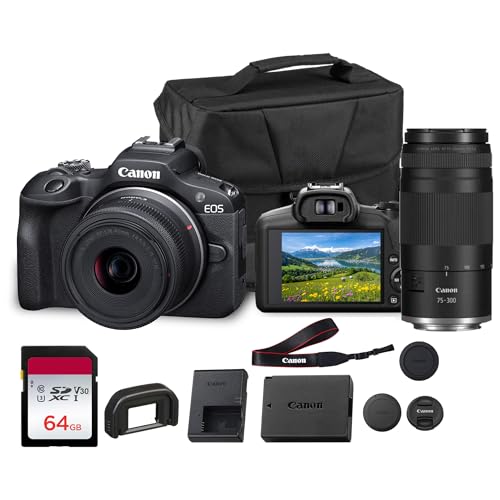
This double lens kit gives you a compact wide-to-normal zoom and a telephoto option. The camera is small and simple to use. You also get a bag and a memory card. It is a clean launch pad for new shooters.
For landscapes, the short zoom is your daily driver. The longer lens helps with distant hills or compressed views. The bag keeps it tidy and ready to go. This kit is made for travel and weekend trips.
Pros:
- Two lenses for wide and distant scenes
- Light, beginner-friendly body
- Bag and card included
- Good color for skies and greens
- Low cost path into RF Mount
Cons:
- Basic autofocus and video
- No in-body stabilization
- Limited low-light performance
My Recommendation
Choose this kit if you want one purchase to start shooting. It is a good gift for a student or a traveler. Use a small tripod and you will get very nice results. In entry kits, it ranks among the Best Mirrorless Cameras for Landscape Photography for pure value and breadth.
| Best for | Why |
|---|---|
| New landscape fans | Two lenses cover many scenes |
| Travel on a budget | Bag and card save money |
| Family trips | Simple use and light weight |
FUJIFILM X-T30 III + XC 13-33mm Kit

The FUJIFILM X-T30 III brings classic dials and compact design. It is light and quick in the hand. The kit zoom covers the useful wide range for landscapes. Fuji film sims add mood without heavy edits.
For day hikes and travel, this kit makes shooting fun. It is easy to carry and fast to set up for a sunrise or street scene. The files hold up well when you expose for highlights. If you enjoy the tactile feel of dials, you will love this camera.
Pros:
- Compact body with classic controls
- Nice color profiles for nature and city
- Light kit lens suits travel
- Fast startup and responsive AF
- Great lens options in X mount
Cons:
- No in-body stabilization
- Not fully weather sealed
- Battery life is modest
My Recommendation
Pick the X-T30 III if you want a stylish, compact kit with strong color. It is ideal for casual landscapes, city scenes, and quick trips. Add a small tripod and you are set. In the realm of the Best Mirrorless Cameras for Landscape Photography, this is a charming and capable travel choice.
| Best for | Why |
|---|---|
| Travel and cityscapes | Small body and quick handling |
| Casual hikes | Light kit lens and clean files |
| Color-focused creators | Film sims save edit time |
FAQs Of Best Mirrorless Cameras for Landscape Photography
What specs matter most for landscapes?
Look for high resolution, strong dynamic range, and good weather sealing. In-body stabilization helps at dawn and dusk. A sharp wide lens is key.
Do I need full-frame for landscapes?
No. Full-frame helps with dynamic range and depth control. But high-quality APS-C bodies can produce stunning prints with sharp glass.
Is in-body stabilization essential?
It helps, but it is not required. A stable tripod beats IBIS for long exposures. IBIS helps when you travel light and shoot handheld.
Which lens should I start with?
A sharp wide zoom is best. Something that covers about 16-35mm full-frame equivalent works for most scenes.
How important is weather sealing?
Very important if you shoot in rain, wind, or dust. It adds peace of mind. Use a rain cover when storms roll in.
Final Verdict: Which Should You Buy?
If you want pro detail in a small body, the FUJIFILM X-T5 kit is my top pick. It blends high resolution, IBIS, and weather resistance.
On a tight budget, the Canon EOS R10 kit offers strong value and light weight. Both sit high among the Best Mirrorless Cameras for Landscape Photography today.

