Night vision goggles have always fascinated people who want to see in the dark—whether you’re a security guard, a soldier, or a wildlife watcher. But have you ever wondered how these devices actually let you see when there’s almost no light? One of the key technologies behind this magic is infrared illumination. Understanding how infrared illumination works in night vision goggles can help you choose the right device, use it more effectively, and avoid common mistakes.
Let’s explore what infrared illumination is, why it matters, and how it fits into modern night vision technology.
What Is Infrared Illumination?
Infrared illumination is a special kind of invisible light that night vision goggles use to brighten up dark scenes. While our eyes cannot see infrared light, night vision devices are designed to pick up these wavelengths and turn them into visible images. Think of it as a flashlight that only your night vision goggles can see.
Infrared (IR) light sits just beyond the red end of the visible spectrum, typically between 700 nanometers (nm) and 1 millimeter (mm) in wavelength. Night vision goggles use IR light mainly in the near-infrared (NIR) range (700–1000 nm), which is strong enough to help the goggles “see” but invisible to most animals and humans.
The Main Purpose
The main job of infrared illumination in night vision goggles is to create extra light when there’s not enough natural light. In a moonless night or a pitch-black room, even the most advanced night vision goggles need some help. This is where the built-in or attachable IR illuminator comes in, shining invisible light on the area so the goggles can form a clear image.
How Night Vision Goggles Work With Infrared Illumination
Night vision goggles use two main technologies: image intensification and digital enhancement. Both can benefit from IR illumination, but the way they use it is a bit different.
Image Intensification
This is the classic green-tinted night vision you see in movies. Image intensification tubes collect whatever tiny bit of light is around—like starlight or distant streetlights—and amplify it thousands of times. When there’s almost zero light, the goggles struggle. That’s when an IR illuminator acts like a secret flashlight, providing the light the tube needs.
Digital Night Vision
Digital night vision goggles use sensors similar to those in cameras. These sensors are sensitive to both visible and infrared light. An IR illuminator helps the sensor capture more details in the dark, often giving a sharper, clearer image than traditional intensifiers under very dark conditions.
Active Vs. Passive Night Vision
- Passive night vision relies only on available light (like moonlight or starlight).
- Active night vision uses an IR illuminator to project invisible light.
Most consumer and military night vision goggles today can switch between passive and active modes, using IR illumination only when necessary.
Types Of Infrared Illuminators
There are several types of IR illuminators used in night vision goggles. Each has its strengths and weaknesses.
1. Built-in Infrared Leds
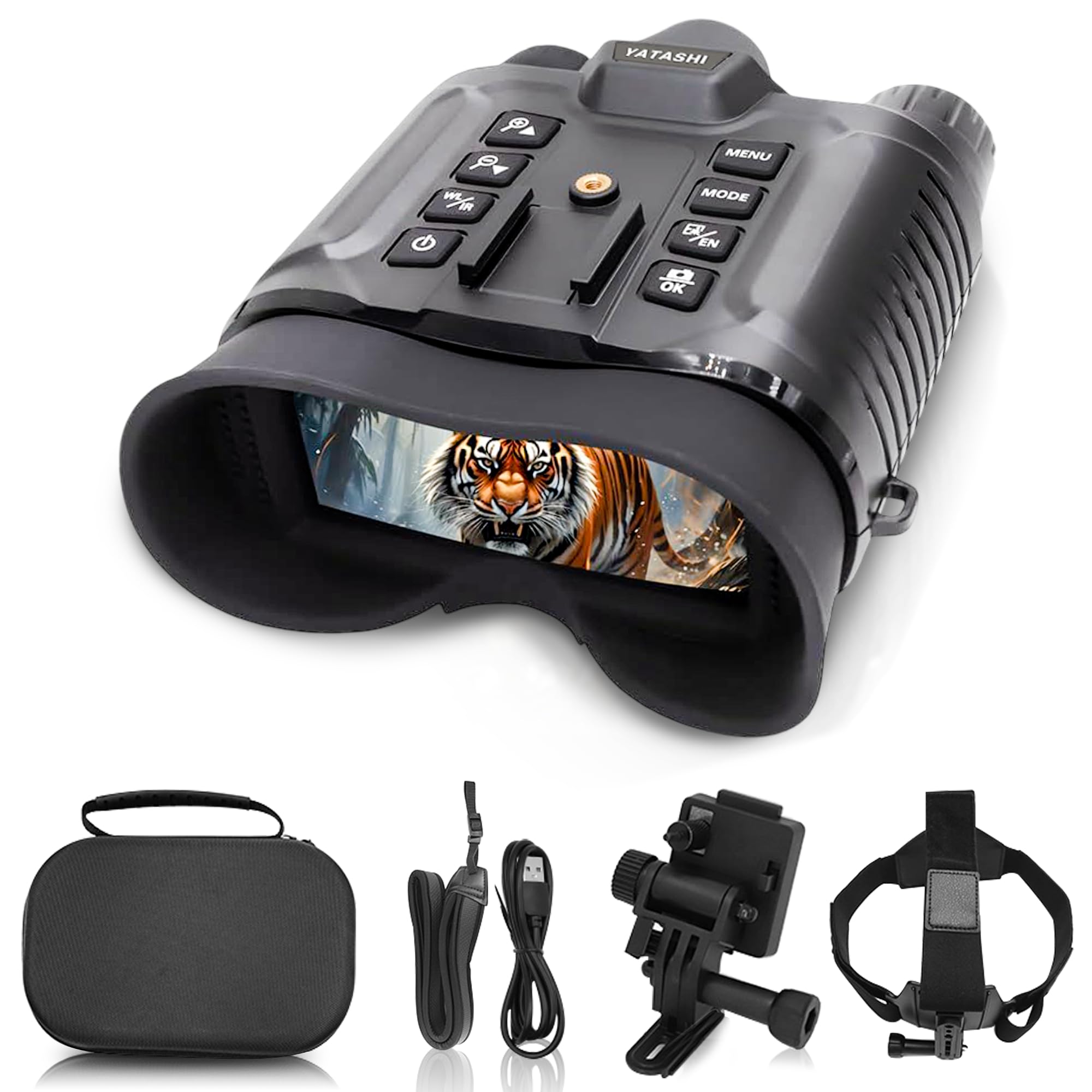
Many modern night vision goggles have infrared LEDs built right into the device. These are small, energy-efficient, and easy to use. You simply switch them on when you need extra light.
2. External Infrared Flashlights
For more power or range, users sometimes attach external IR flashlights. These are larger, often adjustable, and can light up areas dozens of meters away. They are popular with hunters and security professionals who need to see further.
3. Laser Infrared Illuminators
Advanced goggles may use infrared lasers for illumination. These can focus on a tiny spot or flood a wide area with IR light. Lasers are used in tactical or military settings because they offer long range and can even be invisible to some night vision devices, making them harder for enemies to detect.
Comparing Key Features Of Ir Illuminators
To understand the differences, here’s a quick comparison:
| Type | Range | Power Use | Main Use |
|---|---|---|---|
| Built-in LED | Short (up to 20m) | Low | General, home use |
| External Flashlight | Medium (20–100m) | Medium | Hunting, security |
| Laser Illuminator | Long (100m+) | High | Military, tactical |

Why Infrared Illumination Is Important
Many night vision goggles can work without IR illumination, but there are situations where it’s essential:
- Total darkness: In caves, windowless buildings, or deep forests at night, there may be no light at all.
- Improved clarity: Even with some ambient light, IR illumination can help see small details or objects far away.
- Safety and security: Security teams use IR illumination to monitor dark areas without alerting intruders.
How Infrared Illumination Affects Night Vision Performance
Infrared illumination doesn’t just make things brighter—it can also change how night vision goggles perform in several key ways.
Image Sharpness And Detail
IR illumination fills in the shadows and dark spots, revealing objects that would otherwise be missed. This is especially important for tasks like reading signs, identifying animals, or spotting hidden threats.
Range Extension
With a powerful IR illuminator, night vision goggles can see much farther. For example, a standard set of goggles might have a range of 30 meters in starlight, but with IR illumination, the range could jump to 100 meters or more.
Battery Life
Using IR illumination uses more power. Devices with strong IR illuminators may have shorter battery life, especially if used at maximum brightness. It’s important to balance power use with the level of illumination you need.
Stealth
One common mistake is thinking IR illumination is always invisible. While most humans and animals can’t see it, some cameras and other night vision devices can pick it up. If stealth is critical, use the lowest possible IR setting or switch to passive mode.
Practical Uses Of Infrared Illumination In Night Vision Goggles
Night vision goggles with IR illumination are used in many fields, each with unique needs.
Security And Surveillance
Security professionals often patrol large, dark areas like warehouses or parking lots. With IR illumination, they can spot intruders or suspicious objects without using visible flashlights.
Military And Tactical
Soldiers rely on night vision goggles for navigation, search and rescue, and combat. IR illuminators allow them to operate in total darkness. However, they are careful about when and how to use IR, since enemy devices might detect the beam.
Law Enforcement
Police use IR-equipped goggles for surveillance, search operations, and crowd control at night. The ability to see without being seen gives them a major advantage.
Wildlife Observation
Biologists and nature lovers use IR illumination to watch nocturnal animals without disturbing them. Most animals cannot detect near-infrared light, so observers can get close without scaring them away.
Outdoor Recreation
Campers, hikers, and explorers often carry night vision goggles with IR for safety. They can find trails, read maps, or spot hazards after dark.
Key Factors When Choosing Night Vision Goggles With Ir Illumination
If you’re thinking about buying night vision goggles, it’s important to know what to look for when it comes to IR illumination.
| Feature | Why It Matters |
|---|---|
| IR Range | Determines how far you can see in total darkness |
| Adjustable Brightness | Lets you control the amount of light for different situations |
| Beam Angle | Wide beams cover more area, narrow beams reach farther |
| Battery Life | High-power IR drains batteries faster |
| Device Size | Built-in IR keeps goggles compact; external units add weight |
Common Buyer Mistakes
- Ignoring IR Range: Some buyers choose goggles with weak IR illuminators, then find they can’t see far enough.
- Overlooking Battery Needs: High-power IR can drain batteries quickly. Always check the battery life specs.
- Not Checking Compatibility: Not all night vision goggles work with every external IR illuminator. Make sure your device supports add-ons if you want extra range.
- Assuming Total Stealth: While IR is invisible to the eye, it can still be detected by other night vision or security cameras.
Non-obvious Insights About Infrared Illumination
Most beginners miss a few important facts about IR illumination in night vision goggles:
- Infrared Glare: Just like with regular flashlights, shining an IR illuminator on reflective surfaces (like glass or water) can cause glare, making it harder to see. Angle your device away from shiny surfaces for the clearest image.
- Animal Sensitivity: While most mammals can’t see near-infrared, some insects and a few animals (like certain snakes) can sense it. If you’re observing rare wildlife, research the species to avoid disturbing them.
- Legal Restrictions: In some countries, using IR lasers or certain night vision devices may be restricted. Always check local laws before buying or using high-powered IR equipment.
Examples Of Infrared Illumination In Action
- Rescue Missions: In disaster zones with no electricity, rescue teams use IR-equipped goggles to search for survivors in collapsed buildings.
- Border Security: Guards monitor long stretches of border at night using night vision goggles with high-powered IR to spot illegal crossings.
- Nature Photography: Wildlife filmmakers use IR illumination to capture footage of nocturnal animals without using visible lights.

Advances And Trends In Infrared Illumination
Technology is improving rapidly. Newer night vision goggles offer:
- Smarter IR control: Devices can now adjust IR brightness automatically, using just enough illumination to save power and avoid detection.
- Longer battery life: Improved energy efficiency means you can use IR illumination for longer without changing batteries.
- Wider compatibility: Many modern goggles accept a range of external IR illuminators, giving users more flexibility.
For more technical details, you can visit the Wikipedia entry on infrared illuminators.
Frequently Asked Questions
What Is The Difference Between Infrared Illumination And Thermal Imaging?
Infrared illumination uses invisible IR light to brighten a scene for night vision goggles, while thermal imaging detects heat given off by objects. Night vision goggles need some light (visible or IR), but thermal cameras can see in total darkness by measuring heat differences.
Can Other People See My Ir Illuminator When It’s On?
Most humans can’t see near-infrared light, but some night vision devices, security cameras, or even certain animals might detect it. If stealth is important, use the lowest IR setting or passive mode.
How Far Can Night Vision Goggles See With Ir Illumination?
The range depends on the power of the IR illuminator and the quality of the night vision device. Entry-level goggles might reach 20–30 meters, while military models with strong IR can reach 100 meters or more.
Is Infrared Illumination Safe For Eyes?
Standard IR LEDs used in night vision goggles are generally safe, but avoid staring directly into high-powered IR lasers, as they can damage eyes, just like visible laser pointers.
Do All Night Vision Goggles Have Built-in Ir Illuminators?
Not all goggles include built-in IR. Some rely on external IR flashlights or need to be used in areas with some ambient light. Always check the product details before buying.
Infrared illumination is the secret sauce that makes night vision goggles so effective in true darkness. It extends your vision, adds detail, and opens up a world that’s hidden to the naked eye. Knowing how IR works—and its limits—will help you get the most out of your night vision gear, avoid common pitfalls, and make smarter buying decisions.
Whether you’re protecting property, exploring the wilderness, or just curious about the technology, understanding infrared illumination is key to seeing in the dark like never before.