Night vision technology has changed how people see in darkness. From soldiers on the battlefield to wildlife enthusiasts in the forest, night vision opens new possibilities. But when you start learning about night vision, you’ll see terms like Gen 1, Gen 2, and Gen 3. These “generations” mark big steps forward in how night vision works and what you can expect. If you’re wondering what makes each generation different, why some cost more, or which is best for your needs, you’re in the right place. Let’s break down the real differences between Gen 1, Gen 2, and Gen 3 night vision in simple language.
How Night Vision Works
Before diving into the generations, it’s helpful to know the basics. Night vision devices collect tiny amounts of light—like starlight or moonlight—and make it strong enough for your eyes to see. They use a part called an image intensifier tube. This tube takes in the faint light, multiplies it, and shows a brighter image, usually in green.
There are two main types:
- Analog night vision (the focus here), which uses image intensifier tubes.
- Digital night vision, which uses sensors and screens.
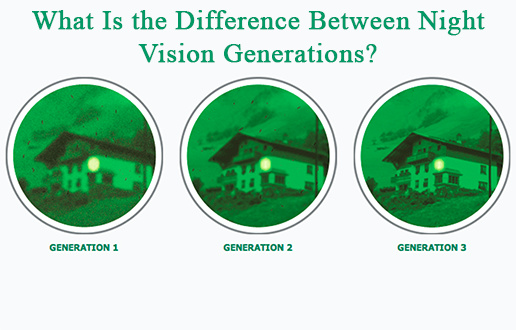
The “Gen” in Gen 1, Gen 2, and Gen 3 refers to different designs of these tubes. Each new generation brings better performance, clearer images, and higher prices.
What Is Gen 1 Night Vision?
Gen 1 night vision is the oldest and most basic form you’ll find today. It became popular in the 1960s and 1970s and is still used in many entry-level devices.
Key Features Of Gen 1
- Affordable price: Gen 1 is the cheapest option, making it popular for beginners.
- Usable range: Usually works up to 75–100 yards (70–90 meters), depending on the device and light.
- Image quality: The image is often grainy and has some distortion, especially at the edges.
- Shorter lifespan: Tubes usually last 1,000–2,000 hours of use.
How Gen 1 Works
Gen 1 devices use a single image intensifier tube. When light enters the front lens, it hits a photocathode, which converts it into electrons. These are multiplied inside the tube and hit a phosphor screen at the end, glowing green. You see this image through the eyepiece.
Pros And Cons
Advantages:
- Very affordable compared to newer generations
- Good for basic use, like backyard viewing or short-range spotting
Drawbacks:
- Lower image clarity (grainy and fuzzy)
- Edges often blur
- Needs some ambient light—struggles in total darkness
- Often needs an extra infrared illuminator to work well
When To Choose Gen 1
Pick Gen 1 if you are:
- On a tight budget
- Only need night vision for simple tasks
- Don’t need to see farther than 100 yards
However, if you need clear images or longer range, higher generations may be better.

What Is Gen 2 Night Vision?
Gen 2 night vision appeared in the late 1970s and 1980s. It brought a big leap in performance, making night vision practical for military, police, and serious outdoor users.
Key Features Of Gen 2
- Medium price: Costs more than Gen 1, but less than Gen 3.
- Greater range: Can see clearly up to 200 yards (180 meters) or more.
- Better clarity: Sharper and brighter images, less distortion.
- Longer lifespan: Tubes often last 2,500–5,000 hours.
How Gen 2 Works
The big upgrade in Gen 2 is the microchannel plate (MCP). This thin, disc-shaped part sits inside the tube. When electrons hit the MCP, they multiply thousands of times, creating a much brighter image. This also reduces noise and improves sharpness, even at the edges.
Pros And Cons
Advantages:
- Much clearer image than Gen 1—less grainy
- Works in darker conditions, even with little ambient light
- Longer range and wider field of view
Drawbacks:
- Still more expensive than Gen 1
- Not as sharp or bright as Gen 3
- Infrared illuminator may still help in total darkness
When To Choose Gen 2
Go with Gen 2 if you need:
- Clearer, brighter images for navigation or observation
- More range than Gen 1
- A balance between price and performance
Hunters, security teams, and law enforcement often use Gen 2 for reliable results without the high price of Gen 3.
What Is Gen 3 Night Vision?
Gen 3 night vision is the top standard used today. It started in the late 1980s and is still used by the U.S. military and many professionals. The main leap is a new type of photocathode made from gallium arsenide, which is much more sensitive to light.
Key Features Of Gen 3
- High price: Usually costs 2–4 times more than Gen 2.
- Longest range: Can see up to 300 yards (275 meters) or more.
- Best clarity: Very crisp, bright images with little noise.
- Longest lifespan: Tubes can last over 10,000 hours.
How Gen 3 Works
Gen 3 keeps the microchannel plate from Gen 2 but adds the gallium arsenide photocathode. This material is excellent at capturing faint light, so the device works even in very dark environments. Some Gen 3 devices also add a thin film to protect the tube and boost performance.
Pros And Cons
Advantages:
- Brightest, sharpest images—almost like daylight
- Performs well in near-total darkness without extra IR light
- Used by military and professionals for a reason
Drawbacks:
- Very expensive—usually $2,500 or more for a monocular
- Export is restricted in some countries due to military use
- May be overkill for casual users
When To Choose Gen 3
Choose Gen 3 if you need:
- The best performance in the darkest environments
- Maximum range and image quality
- Equipment for professional, tactical, or rescue work
If you’re a casual user, Gen 3 may be more than you need.
Key Differences At A Glance
For a clear side-by-side view, here’s a comparison of the main specs for each generation:
| Feature | Gen 1 | Gen 2 | Gen 3 |
|---|---|---|---|
| Price | Low | Medium | High |
| Effective Range | Up to 100 yds | Up to 200 yds | 300+ yds |
| Image Quality | Grainy, distorted | Clearer, less noise | Very clear, bright |
| Lifespan | 1,000–2,000 hrs | 2,500–5,000 hrs | 10,000+ hrs |
| IR Illuminator Needed? | Often | Sometimes | Rarely |
Real-world Example: What You See
To make things easier, here’s what users often report seeing through each generation:
- Gen 1: You spot a rabbit at 60 yards, but the image is fuzzy and you’re not sure if it’s a rabbit or a cat.
- Gen 2: You see the same animal at 120 yards, and you can tell it’s a rabbit. Edges are clearer.
- Gen 3: You see the rabbit at 250 yards, and the image is so sharp you can see its ears and movements clearly.
Practical Uses For Each Generation
Each generation fits different jobs. Here’s a quick guide:
| Job/Use | Gen 1 | Gen 2 | Gen 3 |
|---|---|---|---|
| Backyard Watching | Good | Excellent | Overkill |
| Hiking/Camping | Fair | Good | Excellent |
| Hunting | Poor | Good | Excellent |
| Security/Surveillance | Fair | Good | Excellent |
| Professional/Military | Poor | Fair | Required |
Non-obvious Insights Beginners Often Miss
Many people think “higher generation is always better. ” But that’s not always true.
- IR Illuminator Use: Even Gen 2 and Gen 3 devices can benefit from an infrared (IR) illuminator in pitch-black rooms or forests. However, using an IR light can reveal your position if others have night vision too.
- Tube Quality: Not all Gen 3 tubes are equal. There are commercial and military grades. Some Gen 3 devices may use older or lower-spec tubes, so check what you’re really buying.
Another point: Export restrictions can apply to Gen 3 devices in some countries, so check local laws before buying.

Common Mistakes When Choosing Night Vision
- Focusing only on price: Cheaper Gen 1 devices may not meet your needs if you want clear, long-range viewing.
- Ignoring device condition: Used night vision can have worn-out tubes, giving poor results.
- Not considering batteries: Some devices use rare batteries, which can be hard to find or expensive.
- Forgetting about size/weight: Higher generations sometimes come in heavier, bulkier devices.
Is Digital Night Vision A Generation?
You may see “digital night vision” for sale. This is different from Gen 1–3. Digital devices use sensors and screens, not intensifier tubes. They can record video and work in daylight, but often have more noise and less range than Gen 2 or Gen 3 analog devices.
How To Choose The Right Generation For You
Think about:
- Your use case: Wildlife watching, security, hunting, or professional work?
- How far you need to see: 100 yards or 300 yards?
- Your budget: Gen 1 for entry, Gen 2 for balance, Gen 3 for top-end needs.
- Local laws: Some places limit Gen 3 sales.
If you’re unsure, borrow or try different generations to see the difference with your own eyes.
The Future: Gen 4 And Beyond
Sometimes you’ll see “Gen 4” or “filmless” night vision. While these offer some technical improvements, they’re not officially recognized as a new generation. Most experts and even the U. S. military still use Gen 3 as the gold standard. For most users, Gen 3 is the highest practical level available.
For more technical details, you can check the Wikipedia entry on night vision devices.
Frequently Asked Questions
What Is The Main Difference Between Gen 1, Gen 2, And Gen 3 Night Vision?
The biggest difference is how much light each generation can amplify and the image clarity. Gen 1 is the most basic, with grainy images and short range. Gen 2 is much clearer and works in darker environments. Gen 3 offers the best brightness, sharpness, and range, but is also the most expensive.
How Far Can I See With Each Generation?
With Gen 1, you can usually see up to 100 yards. Gen 2 extends this to about 200 yards. Gen 3 can reach 300 yards or more, depending on the device and ambient light.
Are Gen 3 Night Vision Devices Legal For Civilians?
In many countries, civilians can buy Gen 3 night vision, but there are often restrictions on export and use. Always check local and national laws before purchasing.
Is Digital Night Vision Better Than Gen 2 Or Gen 3?
Digital night vision is different. It’s usually cheaper and can record video, but the image quality and range are often less than Gen 2 or Gen 3 analog devices, especially in very low light.
Do I Need An Infrared Illuminator With Night Vision Devices?
Gen 1 devices almost always need an IR illuminator in dark places. Gen 2 may need one in very low light. Gen 3 often works without one, but an IR illuminator can help in total darkness or to see more detail.
Night vision technology has come a long way. Whether you’re on a budget or need the best tools for the job, knowing the differences between Gen 1, Gen 2, and Gen 3 helps you make the right choice. Each generation has strengths and limits—choose what fits your needs, and you’ll see the night in a whole new way.