Many HVAC professionals are always on the lookout for tools that can make their job easier, faster, and more accurate. One tool that has gained attention in recent years is the borescope. But can a borescope really help with HVAC inspection? And if so, how can it be used effectively? Understanding this can save time, reduce guesswork, and help spot hidden problems in HVAC systems. This article takes a close look at how borescopes fit into HVAC work, the benefits they offer, and what to keep in mind before using one.
What Is A Borescope?
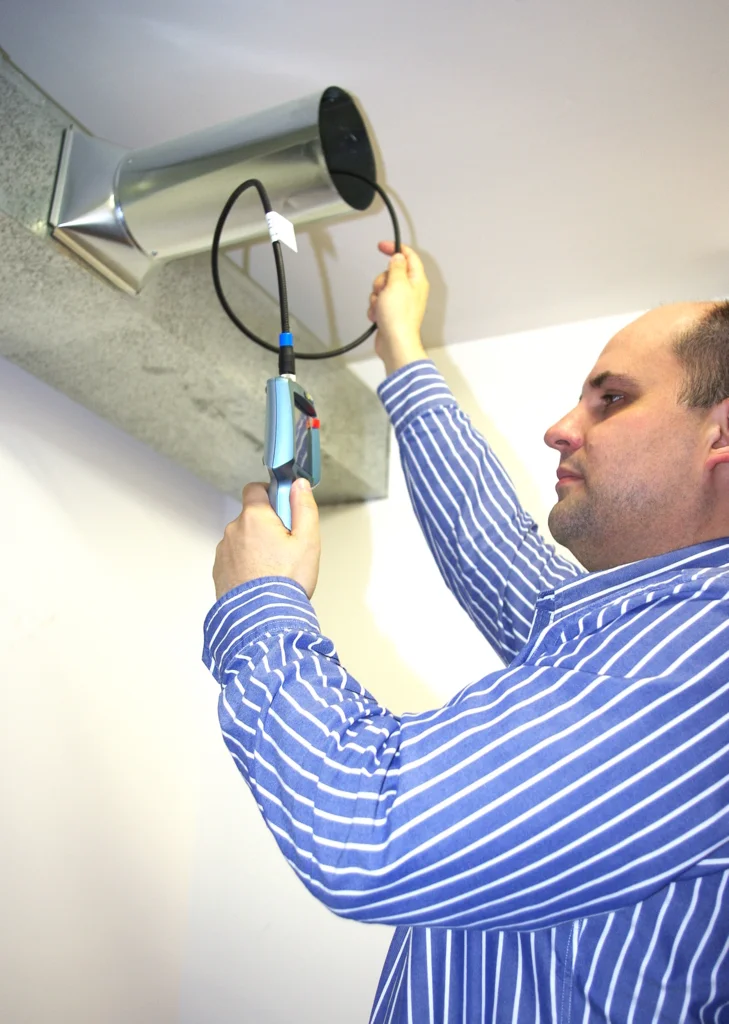
A borescope is a small camera attached to a flexible or rigid tube, often with a light source at the tip. The camera sends live images or video to a screen, allowing users to see inside tight spaces without taking apart equipment. Borescopes range from simple models that connect to a smartphone, to advanced units with recording, articulation, and measurement features.
There are two main types:
- Rigid borescopes: Straight, sturdy tubes best for simple, direct inspections.
- Flexible borescopes: Bendable, often with controls to move the tip for looking around corners.
Some borescopes are also called endoscopes or inspection cameras. In the context of HVAC, the borescope’s small size and ability to reach hidden areas are key advantages.
The Role Of Inspection In Hvac Maintenance
Regular HVAC inspection is crucial for safety, efficiency, and preventing breakdowns. Traditional inspection methods include:
- Visual checks with a flashlight
- Listening for strange noises
- Using mirrors to peek into ducts or coils
- Disassembling parts of the system
However, these methods have limits. Many HVAC components—like heat exchangers, ductwork, and evaporator coils—are hidden behind panels or walls. Taking equipment apart increases labor time and the risk of damage.
This is where a borescope can make a big difference.
How A Borescope Is Used In Hvac Inspection
A borescope allows technicians to see inside parts of an HVAC system that are otherwise hidden. Here are common uses:
1. Inspecting Ductwork
Dust, mold, leaks, and blockages can occur in air ducts. With a borescope, a technician can insert the camera through a vent or small opening to look for:
- Dust and debris buildup
- Visible mold or moisture
- Cracks or leaks in duct seams
- Obstructions, like dropped tools or animal nests
This inspection can be done without cutting new holes or removing long duct sections.
2. Examining Heat Exchangers
A cracked heat exchanger can leak dangerous carbon monoxide into a building. Many heat exchangers are hard to see without major disassembly. A borescope can slip inside through a small port to check for:
- Cracks or corrosion
- Signs of overheating
- Blockages
Finding problems early can prevent safety hazards and expensive repairs.
3. Checking Evaporator And Condenser Coils
Dirty or damaged coils lower system efficiency. Borescopes can be used to:
- Spot dirt buildup deep in the coil fins
- Look for corrosion or leaks
- Inspect hard-to-reach coil sections
Some borescopes have measuring functions, letting the technician estimate the size of a problem area.
4. Inspecting Drain Pans And Lines
Blocked or dirty drain pans and lines can lead to water leaks and mold. A borescope helps by:
- Visually confirming blockages
- Identifying mold or algae growth
- Checking for cracks or damage
This is especially helpful in commercial rooftop units where access is limited.
5. Verifying Repairs And Cleaning
After work is done, a borescope can verify that the problem is truly fixed. For example, after cleaning a duct, the camera can check for leftover debris.
6. Finding Hidden Leaks
Leaks in refrigerant lines or insulation are hard to spot. A borescope helps by:
- Checking under insulation wraps
- Looking at pipe joints in tight spaces
- Spotting oil residue from leaking refrigerant
Key Benefits Of Using A Borescope For Hvac Inspection
There are several practical advantages to using a borescope:
- Less disassembly: See inside without taking the whole unit apart.
- Faster diagnosis: Find problems quickly, reducing downtime.
- Better documentation: Save photos and videos for customer records or warranty claims.
- Safer inspection: Avoid dangerous areas, like sharp metal or electrical hazards.
- More accurate estimates: Show customers visual proof of issues, building trust.
One non-obvious benefit is reducing callbacks. When you can see and document the problem, you’re less likely to miss something and have to return later.

Comparing Traditional Hvac Inspection Vs. Borescope Inspection
The table below highlights key differences:
| Aspect | Traditional Inspection | Borescope Inspection |
|---|---|---|
| Access | Limited, often requires disassembly | Accesses tight, hidden spaces easily |
| Speed | Slower, more labor-intensive | Much faster for many tasks |
| Documentation | Written notes or manual sketches | Photo/video evidence |
| Cost | Higher due to time and labor | Lower operational costs over time |
| Damage Risk | Higher (removing panels, parts) | Minimal, less invasive |
Limitations And Challenges
While borescopes are powerful, they’re not perfect. Some challenges include:
- Image clarity: Cheap borescopes may have blurry or distorted images, making small cracks hard to spot.
- Learning curve: Using a borescope well takes practice. It’s easy to miss details if you move too fast.
- Limited reach: Very long or sharply curved ducts may be hard to inspect fully, even with a flexible camera.
- Lighting: Dusty or reflective surfaces can make viewing difficult, especially if the built-in LED isn’t bright enough.
A common beginner mistake is moving the borescope too quickly. Slow, steady movement and careful observation are key for accurate inspections.

Choosing The Right Borescope For Hvac Work
Not all borescopes are created equal. When selecting a borescope for HVAC inspection, consider these factors:
1. Camera Quality
Look for a high-resolution camera (at least 720p, ideally 1080p or higher). This makes it easier to spot fine cracks or corrosion.
2. Flexibility And Length
A flexible probe (at least 3-6 feet) can access most HVAC components. Some advanced models have articulating tips that can be steered around corners.
3. Light Source
Bright, adjustable LED lights at the camera tip are essential. Some borescopes let you control brightness to suit different environments.
4. Screen And Recording
A built-in display is convenient, but smartphone-connect models offer larger screens and easy file sharing. Consider if you need to save photos or video for records.
5. Probe Diameter
A thin probe (under 10mm) fits into small access holes. For ductwork, sometimes even thinner probes are needed.
6. Durability
Choose a model with a waterproof and dustproof rating. HVAC environments can be dirty and humid.
7. Battery Life
Longer battery life means fewer interruptions on big jobs.
Compare features using the table below:
| Feature | Entry-Level Borescope | Professional HVAC Borescope |
|---|---|---|
| Camera Resolution | 720p | 1080p or higher |
| Probe Length | 1-3 feet | 3-10 feet |
| Articulation | No | Yes (in some models) |
| Recording Capability | Sometimes | Usually |
| Durability | Basic | Waterproof, dustproof |
Practical Tips For Effective Borescope Use In Hvac
Getting the most from a borescope takes more than just buying the right tool. Here are some practical tips:
- Clean the lens regularly: HVAC work is dusty. A dirty lens means blurry images.
- Practice on old units: Before using on customer equipment, practice moving the camera and recognizing common problems.
- Go slow: Scan slowly, looking for small changes in color, texture, or shape.
- Use the right access points: Take time to find the best spot to insert the probe. Sometimes opening a small service port saves a lot of time.
- Document findings: Take clear pictures and label them. This builds trust with customers and helps with record-keeping.
- Check lighting: Adjust the LED brightness to reduce glare or shadows.
- Don’t force the probe: Bending too sharply can break the camera or get it stuck.
A non-obvious tip: sometimes a small mirror at the tip (available on some models) can help see around corners or behind obstructions.
When Not To Use A Borescope
There are times when a borescope is not the best tool:
- Extremely narrow or blocked access: If the probe cannot fit, forcing it can cause damage.
- Electrical hazard areas: Never insert a borescope where live wires are exposed unless the tool is rated for electrical safety.
- Active leaks: In areas with standing water, make sure the borescope is waterproof.
Some issues, like airflow testing or refrigerant pressure checks, require other diagnostic tools. The borescope is best for visual inspection.
Legal And Safety Considerations
In some regions, HVAC inspections require specific certifications or documentation. Photos and videos from a borescope can support reports, but always follow local codes and guidelines. Be sure your borescope is rated for the temperatures and environments you’ll encounter.
Also, respect customer privacy. Only record and store images needed for the job, and explain why you’re using the camera.
Real-world Examples
- An HVAC tech used a borescope to find a bird’s nest deep inside a return duct, saving hours of disassembly.
- In a commercial kitchen, a borescope revealed a hidden crack in a heat exchanger, preventing a major carbon monoxide leak.
- After coil cleaning, a technician used the camera to show the customer the before-and-after results, building trust and justifying the service.
These examples highlight that a borescope is not just a gadget—it’s a practical tool that can improve service quality and safety.
The Bottom Line
A borescope is a valuable tool for HVAC inspection, offering a clear view into areas that are otherwise hidden or hard to reach. It speeds up diagnosis, supports better customer communication, and can even reduce costs over time. However, to get the best results, it’s important to choose the right model, practice your technique, and know when another tool is needed.
For most HVAC professionals, investing in a quality borescope pays for itself quickly, especially as systems become more compact and complex. Used wisely, it’s an essential part of the modern technician’s toolkit. For further reading on inspection cameras and their uses, see this Wikipedia page on borescopes.
Frequently Asked Questions
What Is The Main Advantage Of Using A Borescope For Hvac Inspection?
The main advantage is the ability to see inside hidden or hard-to-reach areas without disassembling equipment. This saves time, reduces labor, and helps find problems that might otherwise be missed.
Can A Smartphone Endoscope Be Used For Professional Hvac Work?
While smartphone endoscopes are affordable and convenient, many lack the durability, camera quality, and probe length needed for serious HVAC work. For professional jobs, invest in a model designed for demanding environments.
Are There Risks To Using A Borescope In Hvac Systems?
Yes. Risks include damaging the probe if forced into tight spaces, missing small defects due to poor image quality, and exposing the tool to water or electricity if not rated for those conditions. Always follow safety guidelines.
How Often Should An Hvac System Be Inspected With A Borescope?
It depends on system age and use. Annual inspections are common for residential systems, but high-use or commercial systems may need more frequent checks, especially for critical components like heat exchangers.
Do All Hvac Technicians Use Borescopes?
Not all, but borescope use is growing as systems become more compact and complex. Many leading HVAC companies now equip their techs with borescopes as a standard tool for thorough inspections.