What Is The Difference Between A Borescope And An Endoscope?
If you’ve ever needed to look inside a tight, hidden, or hard-to-reach place, you might have heard of a borescope or an endoscope. These tools are like magic eyes—helping people see inside engines, walls, machines, or even the human body. But although their names sound similar, and they both use small cameras, they are not the same thing. If you’re confused about which does what, or why someone would use one instead of the other, you’re in the right place. Let’s explore what sets borescopes and endoscopes apart, where they are used, and why those differences matter.
What Is A Borescope?
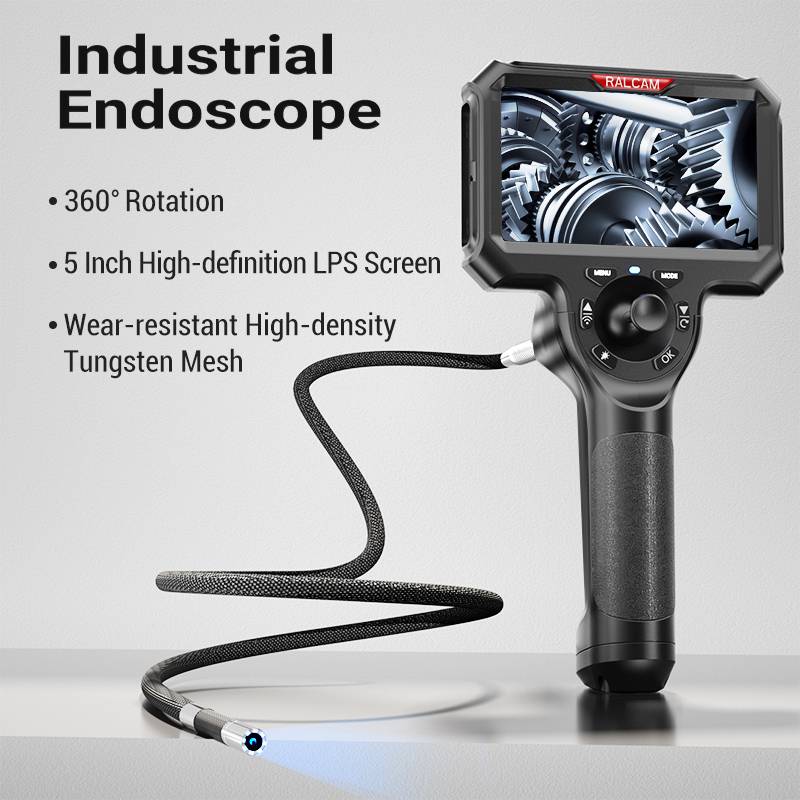
A borescope is a tool designed to look inside machines, pipes, engines, or tight spaces that are otherwise impossible to see with the naked eye. It usually has a long, thin tube with a camera or lens at the end. The camera sends video or pictures to a screen, so you can see what’s inside.
Borescopes come in different types. Some are rigid (they don’t bend), and some are flexible (they can curve around corners). They are used in many industries, such as:
- Automotive repair: Mechanics use borescopes to look inside engines without taking them apart.
- Aviation: Technicians check jet engines for damage.
- Plumbing: Plumbers find blockages inside pipes.
- Manufacturing: Inspectors check for cracks in machines or welds.
Borescopes help find problems early, saving time and money. Most are designed to be tough and resistant to oil, dust, or even water.
What Is An Endoscope?
An endoscope is a special tool mainly used in medicine. Doctors use it to look inside the human body—like the stomach, lungs, or joints—without needing big cuts or surgery. An endoscope is also a thin, flexible tube with a tiny camera and light at the end.
Doctors insert endoscopes through natural openings, like the mouth or nose, or small incisions. The live video helps them see what’s happening inside, take tissue samples (biopsies), or even do surgery.
There are many types of endoscopes, named for the body part they examine:
- Gastroscope: For the stomach
- Bronchoscope: For the lungs
- Colonoscope: For the colon
Endoscopes are carefully sterilized after each use to prevent infection. Their design must be gentle and safe for the human body.
Key Differences Between Borescopes And Endoscopes
Although borescopes and endoscopes sound alike, their differences are important. Here’s a closer look at what sets them apart.
| Feature | Borescope | Endoscope |
|---|---|---|
| Primary Use | Industrial inspection | Medical examination |
| Design | Built for durability | Designed for safety in the human body |
| Sterilization | Not always required | Always required |
| Camera Size | Larger, less precise | Very small, high-precision |
| Flexibility | Rigid or flexible | Mostly flexible |
| Image Quality | Good for industrial use | High resolution for medical detail |
1. Purpose
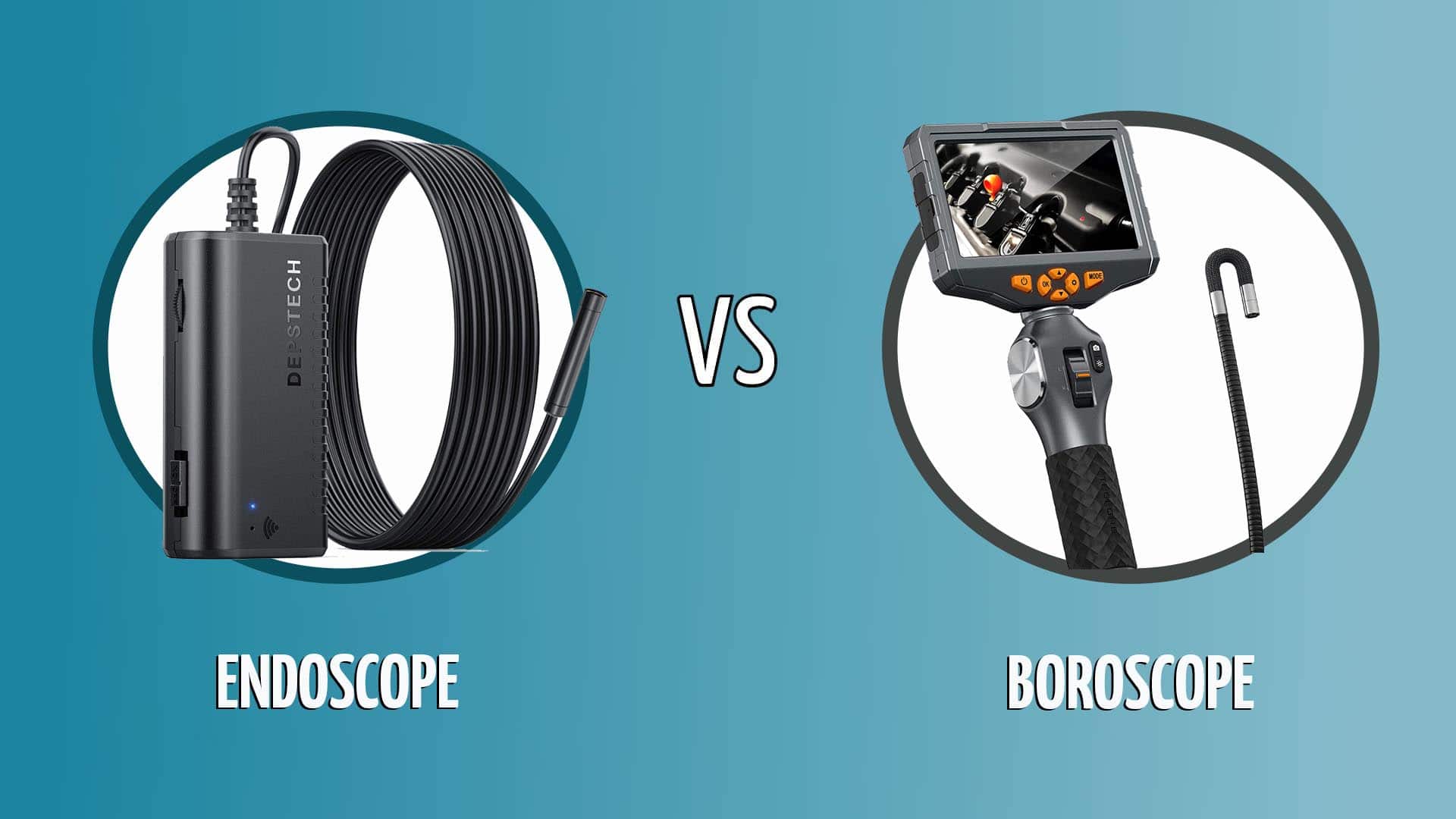
The biggest difference is why they are used. Borescopes are for machines and structures. Endoscopes are for medical use inside the body. Using the wrong tool in the wrong setting can be dangerous or ineffective.
2. Construction And Materials
A borescope is built to survive tough conditions—oil, chemicals, or rough handling. They can be made from stainless steel or strong plastics. Endoscopes, by contrast, use medical-grade materials that are gentle, safe, and non-toxic. An endoscope must not damage tissue or cause reactions.
3. Sterilization Needs
Endoscopes have strict cleaning rules. After each use, they are disinfected or sterilized to kill bacteria and viruses. Borescopes usually don’t need this level of cleaning because they don’t enter living bodies.
4. Camera And Lighting
Borescopes have cameras good enough to spot cracks, rust, or blockages, but they don’t need to see tiny cells or veins. Endoscopes use high-quality cameras and bright lights to see fine details, because a doctor’s diagnosis depends on clear images.
5. Size And Flexibility
Endoscopes are usually thinner and more flexible than borescopes. They must fit into small body parts and curve gently. Some borescopes are also flexible, but they are often thicker and less delicate.
How They Work: Technical Basics
Both tools use the same basic idea: a camera and light at the end of a long tube. The camera sends images or video through wires or fiber optics to a screen. But there are some differences in technology.
| Aspect | Borescope | Endoscope |
|---|---|---|
| Insertion method | Through holes, openings, or small cuts in objects | Through body openings or small incisions |
| Control | Manual steering, sometimes joystick | Precise controls for gentle movement |
| Image transmission | Wired or wireless to monitor | Wired, sometimes with video recording |
| Extra tools | May have hooks or magnets for picking up objects | Can include forceps, scissors, or suction for medical procedures |
Image Quality And Lenses
Endoscopes often use fiber optic bundles or high-definition lenses for detailed images. Some modern medical endoscopes can even show 3D images or special views (like narrow-band imaging for cancer detection). Borescopes focus on practical visibility, not medical precision.
Movement And Control
Borescopes may have simple handles or basic controls. Endoscopes use precise steering, sometimes controlled by a doctor with both hands. Some endoscopes have robotic controls for very complex movements inside the body.
Where Are They Used? Real-world Examples
Understanding the environments where borescopes and endoscopes work shows why their differences matter.
Borescope Applications
- Engine Inspection: Car mechanics use borescopes to check for cylinder wall scratches or piston damage without opening the engine.
- Aircraft Maintenance: Aviation inspectors look for cracks or foreign objects inside turbine engines. A single inspection can prevent accidents.
- Pipe and Drain Checks: Plumbers use borescopes to find blockages, leaks, or corrosion in pipes, reducing guesswork and repair time.
- Building Inspections: Construction experts check for mold, termite damage, or wiring problems inside walls, ceilings, or floors.
- Manufacturing Quality Control: Factories inspect welds or machine parts for defects, ensuring products meet safety standards.
Endoscope Applications
- Gastroscopy: Doctors examine the stomach and upper digestive tract to find ulcers, bleeding, or tumors.
- Colonoscopy: Used to check the colon for polyps, cancer, or inflammation. Colonoscopies save lives by detecting colon cancer early.
- Bronchoscopy: Checks the lungs and airways for infection, tumors, or blockages.
- Arthroscopy: Surgeons look inside joints (like knees or shoulders) to diagnose or repair damage.
- Laparoscopy: Used for “keyhole” surgeries in the abdomen, reducing recovery time for patients.
Safety And Regulations
Because endoscopes go inside the human body, they follow strict safety and quality rules. Regulatory agencies like the FDA (Food and Drug Administration) in the United States test and approve endoscopes before they reach hospitals.
Borescopes also follow standards, especially in aviation or nuclear industries, but these focus more on durability and accuracy, not infection control.
Common Mistakes When Choosing Or Using Each Tool
Many beginners think a borescope and endoscope are interchangeable. Here’s why that’s risky:
- Using a Borescope for Medical Purposes: Industrial borescopes are not sterile. Using them in the human body can cause infection or injury.
- Choosing Based on Price Alone: Endoscopes are more expensive because of their precision and safety. Cheaper borescopes may not offer the required image quality for medical or detailed industrial work.
- Ignoring Flexibility Needs: A rigid borescope can’t navigate curved pipes. Likewise, an inflexible endoscope can’t move safely inside the body.
- Neglecting Cleaning Procedures: Failing to sterilize endoscopes can spread infections between patients.
- Overlooking Camera Quality: For tasks needing detailed images (like diagnosing cancer), high-resolution endoscopes are a must.
Advancements And Trends
Technology is changing both borescopes and endoscopes. Today, you’ll find:
- Wireless borescopes that send video to smartphones, making them easier to use in the field.
- Disposable endoscopes for single use, reducing infection risk.
- Smaller cameras with better resolution, allowing even less invasive procedures or inspections.
- AI-powered image analysis: Some medical endoscopes now use artificial intelligence to help doctors spot problems faster.
A surprising fact: the global endoscopy market is expected to reach over $35 billion by 2028, driven by the need for less invasive procedures and aging populations.
Choosing The Right Tool: What To Consider
If you need to pick between a borescope and an endoscope, think about:
- Purpose: What are you inspecting? (Machine or body?)
- Image detail: Do you need to see fine structures or just large blockages?
- Safety: Will the tool touch living tissue?
- Flexibility: Does it need to bend around corners?
- Cleaning: Is sterilization required?
- Budget: Can you afford a high-quality device for precision work?
Sometimes, specialized fields develop hybrid tools. For example, veterinarians may use “medical borescopes” for animal care, but these are still designed to meet higher safety standards.
Two Insights Beginners Usually Miss
- Image Quality Can Be Life-Changing: In medicine, a slightly blurry image might mean missing a cancer diagnosis. In industry, missing a small crack can lead to expensive failures or accidents.
- Tool Size Matters More Than You Think: A few millimeters in diameter can make the difference between reaching the target area or not. Always check the size of the tool and the space you need to access.

Frequently Asked Questions
What Is The Main Difference Between A Borescope And An Endoscope?
The main difference is their purpose. A borescope is for inspecting machines and structures, while an endoscope is for medical examination inside the human body. They are built with different safety, cleaning, and image quality standards.
Can You Use A Borescope As An Endoscope?
No, you should not use a borescope for medical purposes. Borescopes are not sterile, and their materials may harm living tissue or cause infection.
Are There Disposable Versions Of These Tools?
Yes, especially in medicine. Disposable endoscopes are becoming more common in hospitals to reduce infection risk. Some industries use disposable borescopes for dangerous or dirty inspections.
How Small Can Borescope And Endoscope Cameras Get?
Modern endoscopes can be as thin as 2-3 mm in diameter, small enough for delicate procedures. Borescopes can be very small too, but usually not as thin as medical endoscopes. Camera size continues to shrink with technology.
Where Can I Learn More About The Technical Standards For These Tools?
You can find more about medical endoscope safety and standards on the Wikipedia Endoscope page, which links to regulatory information and technical details.
The differences between borescopes and endoscopes are more than just their names or shapes. Choosing the right tool for the job protects safety, improves results, and helps you see what was once hidden. Whether you’re repairing an engine or saving a life, knowing which tool to use—and why—makes all the difference.