When you work with cars, sometimes you need to see inside places your eyes cannot reach. Engines, fuel tanks, and exhaust pipes often hide problems that are hard to spot. This is where a borescope becomes a must-have tool for automotive inspection. Choosing the best borescope is not always easy. With so many models, sizes, and features, it’s easy to feel lost—especially if you’re new to these devices.
This article will guide you through the essentials of picking the right borescope for car inspection. We’ll compare top models, explain key features, and share practical tips so you can make a smart choice. Whether you’re a DIY mechanic, a professional, or a car enthusiast, you’ll find everything you need to know about buying and using a borescope for automotive work.
What Is A Borescope And Why Use One For Cars?
A borescope is a small camera on the end of a flexible or semi-rigid tube. You insert it into tight spaces, and the camera sends video or pictures to your phone, tablet, or a built-in screen. Borescopes help you see inside engine cylinders, intake valves, transmission cases, and other hidden areas.
Here’s why mechanics and car owners use borescopes:
- Save time and money: Find problems without removing engine parts.
- Prevent damage: Spot early wear or debris before it causes bigger issues.
- Work safely: Reduce the risk of breaking something while exploring blind.
- Better decision-making: Know exactly what’s wrong before you start repairs.
Many car issues, like carbon buildup, cracked pistons, or stuck valves, are invisible from outside. A borescope lets you inspect them directly. This tool can also help when buying a used car, giving you proof of engine condition.
Key Features To Consider When Choosing A Borescope
Not all borescopes are the same. The best borescope for automotive inspection depends on your needs, budget, and how you plan to use it. Here are the main factors to keep in mind:
Camera Diameter
Engine spark plug holes and fuel injectors are often narrow. Most cars have access holes between 5mm and 10mm. A camera head that’s too large won’t fit. For most automotive work, a 5.5mm or smaller camera diameter is ideal.
Cable Length And Flexibility
Short cables (1–2 meters) work for most car jobs, like cylinder inspection. Longer cables (3 meters or more) are better for trucks or deep cavities, but can be harder to control. Look for a flexible yet sturdy cable that stays in shape but can be guided around bends.
Image Quality
Resolution matters. A 1080p (2MP) camera is now common, giving clear pictures and video. Lower resolution may miss small cracks or debris. Some high-end borescopes offer even better clarity, but 1080p is enough for most users.
Lighting
Good borescopes have adjustable LED lights near the camera tip. This helps you see in dark spaces. Check for at least 6 LEDs. Some models have side-view cameras with extra lights for better all-around vision.
Screen Vs. Smartphone Connection
Some borescopes have their own screen. Others connect to your phone or tablet via WiFi or USB. Built-in screens are faster to use, but smartphone models are lighter and easier to save or share images.
Waterproof And Durability
Engines are dirty and sometimes wet. A borescope with at least IP67 waterproof rating will survive oil, coolant, and cleaning. Cheap borescopes may break easily, so check user reviews for real-world durability.
Battery Life
If you use your borescope often, choose one with a battery that lasts at least 2 hours. Some models are powered by your phone or plug into USB, so they don’t need charging.
Extra Features
- Articulating tip: Some premium borescopes let you bend the tip for better viewing angles.
- Side camera: Gives a wider view.
- Photo/video capture: Save evidence or share with others.
- Accessories: Magnetic tips, hooks, or mirrors help retrieve dropped parts.

Top 7 Borescopes For Automotive Inspection In 2024
Here are seven of the best borescopes for automotive use right now, based on their features, reliability, and user reviews. Each has its own strengths.
1. Depstech Ds520 Dual Lens Borescope
This model stands out for its dual lens—one front, one side—making it easier to see both straight and sideways inside engine parts. It has a 5mm camera, 4.3-inch color screen, and 1080p resolution. The cable is semi-rigid and 5 meters long, which covers most car jobs. Six LEDs provide excellent light. You don’t need WiFi or an app; just turn it on and inspect.
Insight: Many beginners forget to check if their borescope’s cable is flexible enough. The DS520’s cable holds its shape for precise control, which is key when working around engine bends.
2. Teslong Nts300 Industrial Endoscope
A favorite among professional mechanics, the Teslong NTS300 features a rotatable 5-inch HD screen and a 5.5mm camera. It offers both straight and side views for complete inspection. The menu is simple, and the battery lasts over 4 hours. The cable is tough and resists oil or coolant. While pricier, it’s built for daily shop use.
Non-obvious insight: Cheap borescopes can overheat and shut off in hot engine bays. Teslong’s model is designed to handle high temperatures, making it more reliable for frequent inspections.
3. Oiiwak Industrial Endoscope
The Oiiwak borescope uses a very slim 3.9mm camera, which fits almost any spark plug hole. The image is sharp, and the cable is soft but stays where you want it. It connects directly to your phone via USB, making it lightweight and easy to carry. It’s a good choice for quick checks or portable kits.
4. Bluefire Wifi Borescope
If you prefer using your smartphone, the BlueFire WiFi Borescope is a good pick. It works with iOS and Android, and the app is simple. The 5.5mm camera gives clear 1080p video, and the 10-meter cable is handy for deep or awkward inspections. The WiFi signal is strong, so you won’t lose the picture even inside the car body.
5. Vividia Ablescope Va-400
This is one of the few affordable borescopes with an articulating tip. You can bend the camera head up to 180°, which lets you look around valves, pistons, or behind obstacles. It plugs into a laptop or Android phone. The 8.5mm camera is slightly bigger, so check your access hole first.
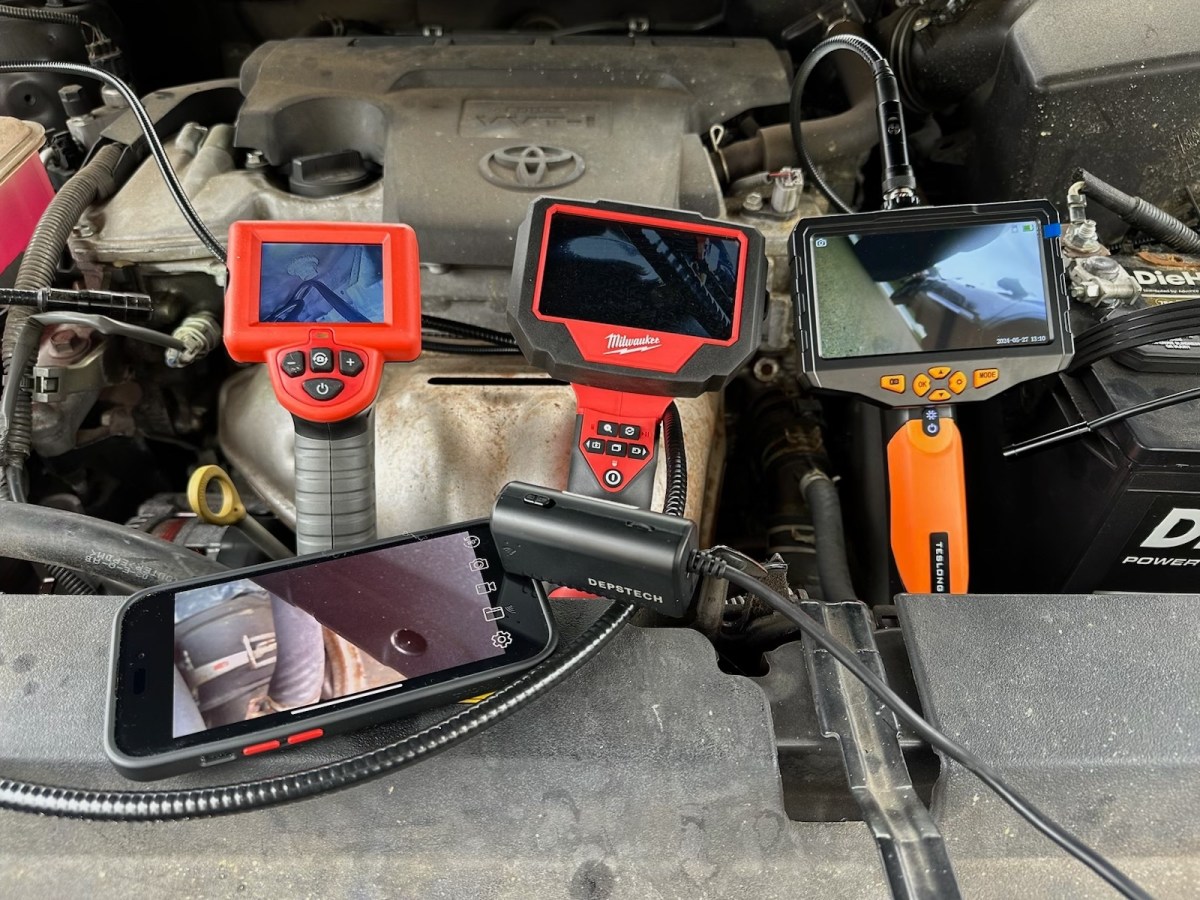
6. Milwaukee M12 M-spector Flex
Made by a trusted tool brand, this model is tough and ready for shop environments. The rotating screen is easy to read even in sunlight. The camera is 8mm, so it’s best for larger spaces. The cable is rugged and the battery lasts long. It’s more expensive, but perfect for those who already use Milwaukee’s M12 battery system.
7. Teslong Dual Lens Inspection Camera
This model combines a dual-lens system with a 4.5-inch HD screen and a 16.4-foot cable. You can switch between front and side cameras with a button—no need to twist the cable. The cable is oil-resistant and waterproof. It’s a top choice for busy mechanics who need to check many cars quickly.
Comparison Of Key Borescope Features
To help you see the differences, here’s a quick comparison of the top models:
| Model | Camera Size | Screen Type | Cable Length | Special Feature |
|---|---|---|---|---|
| DEPSTECH DS520 | 5mm Dual Lens | 4.3″ Built-in | 5m | Side camera |
| Teslong NTS300 | 5.5mm | 5″ Built-in | 3m | Rotatable screen |
| Oiiwak Endoscope | 3.9mm | Phone/Tablet | 1.5m | Ultra slim |
| BlueFire WiFi | 5.5mm | Phone/Tablet | 10m | WiFi connection |
| Vividia VA-400 | 8.5mm | PC/Phone | 1m | Articulating tip |
| Milwaukee M-Spector | 8mm | Rotating screen | 3m | Heavy-duty |
| Teslong Dual Lens | 5.5mm | 4.5″ Built-in | 5m | Dual lens |

How To Use A Borescope For Car Inspection
Using a borescope is simple, but there are a few steps that make the process easier and safer.
- Charge or set up your device: Make sure the battery is full or the cable is ready.
- Select the right cable and camera head: Use the smallest camera that fits.
- Clean the area: Remove dirt or oil from the spot you’ll inspect.
- Insert gently: Don’t force the cable, or you might damage engine parts.
- Adjust the lighting: Start with medium LED brightness to avoid glare.
- Explore slowly: Move the camera in small steps and watch the screen closely.
- Take pictures or video: Document anything unusual for later review.
- Remove and clean: Wipe the camera tip after use.
Pro tip: Always rotate the camera while moving forward or backward. This helps you spot cracks or deposits that are only visible from certain angles.
Common Mistakes When Choosing Or Using A Borescope
- Ignoring camera size: Buying a camera that’s too big for spark plug holes is a common error.
- Overlooking battery life: If you inspect many cars in a row, a short battery can be frustrating.
- Forgetting compatibility: Some borescopes only work with Android, not iOS, or need special apps.
- Skipping waterproofing: Oil and coolant leaks are common; non-waterproof models often fail fast.
- Not checking warranty: Cheap models often have short or no warranty. Pay attention to customer support.
Table: Pros And Cons Of Built-in Screen Vs. Smartphone Borescopes
| Feature | Built-in Screen | Smartphone Connection |
|---|---|---|
| Setup Speed | Faster | Slower (needs pairing/app) |
| Portability | Heavier | Lighter |
| Image Sharing | SD Card/USB | Easy via phone |
| Battery Life | Independent battery | Uses phone power |
| Price | Usually higher | Lower |
Practical Tips For First-time Buyers
- Buy the smallest camera that fits your car’s access holes. Even if you work on many vehicles, small cameras are more flexible.
- Choose a semi-rigid cable for most engine work. It’s easier to control than a floppy, fully flexible wire.
- Check app compatibility before you buy. Download the app and see if it works with your device.
- Read real user reviews, not just product ads. Some borescopes claim 1080p but deliver lower quality in practice.
- Consider future needs. If you plan to inspect home plumbing or walls too, a longer cable may be better.
When Should You Buy An Expensive Borescope?
High-end borescopes cost $200–$500 or more. They’re worth it if:
- You work as a professional mechanic or inspector.
- You need a rotating or articulating camera head.
- You want top-level image quality for detailed diagnosis.
- You use the tool daily and need a longer warranty or rugged build.
For most car owners and DIYers, a $40–$120 model covers all basic inspection needs.
Real-world Example
A mechanic suspects a used car has a burnt valve. Instead of removing the cylinder head (a $500 job), he uses a Teslong Dual Lens borescope through the spark plug hole. The camera clearly shows a damaged valve edge. The customer saves time and money, and the mechanic avoids unnecessary work.
Where To Learn More
For deeper details on how borescopes work and their history, you can read this Wikipedia page.
Frequently Asked Questions
What Size Borescope Camera Is Best For Car Engines?
For most car engines, a 5.5mm or smaller camera fits through spark plug and injector holes. Some borescopes offer 3.9mm cameras for extra narrow spaces.
Can I Use A Plumbing Borescope For Cars?
Plumbing borescopes often have larger cameras and longer, less flexible cables. They might not fit in engine parts. Choose a slim, automotive-specific borescope for best results.
Do I Need An Articulating Camera For Car Inspection?
Not always. Articulating cameras help see around corners or behind valves, but they are more expensive. For basic engine checks, a regular straight camera is usually enough.
Are Borescopes Safe For All Engine Types?
Yes, if used carefully and the camera is clean. Always insert the camera gently to avoid scratching or damaging engine parts. Waterproof models are safest around fluids.
Can I Record Video With My Borescope?
Most modern borescopes let you record video or take pictures. Models with built-in screens usually save to an SD card, while smartphone-connected types use your phone’s storage.
Choosing the best borescope for automotive inspection is about matching the tool to your needs. With the right features and careful use, you’ll see more, fix faster, and avoid costly mistakes.