The best wildlife lens for DSLR balances reach, speed, stabilization, and autofocus.
You can love wildlife and still miss the shot. Maybe the fox pauses, the hawk dives, or the elk steps out, and your lens just can’t reach. I’ve been there. In 2026, many photographers still shoot with DSLRs because they’re tough, familiar, and great with big lenses. The right glass turns a walk in the woods into a portfolio day. In this guide, I’ll show you the best wildlife lens for DSLR for different budgets, mounts, and skill levels, and I’ll explain the trade-offs so you can buy with confidence.

Nikon AF-S DX NIKKOR 55-300mm…
This Certified Refurbished product is manufacturer refurbished it shows limited or no wear Includes all original accessories plus a 90 day warranty 5.5x Telephoto Zoom lens, Filter Thread: 58 mm,…

Nikon AF-S FX NIKKOR 200-500mm…
Compact super telephoto zoom lens for birding, wildlife, motorsports, events and more 500 millimeter of zoom power on fx format DSLR; 750 millimeter equivalent on dx format DSLRs, minimum focus…

EF/EF-S 420-800mm F8.3 Telephoto Zoom…
[Easy-to-Use Warm Tips] – ⚠Fully manual(Advantages: precise focus control, creative freedom, high adaptability, stability and durability, and learning value) lens has no electronic contacts for focusing. Switch the camera to…
Nikon 55-300mm f/4.5-5.6G DX VR
This Nikon AF-S DX 55-300mm VR is a great budget telephoto for DX bodies. It gives you an 82.5–450mm equivalent view, which is perfect for birds at the feeder, deer at dusk, and safari parks. Vibration Reduction helps keep shots sharp at slower speeds. The AF-S motor is quiet and works well for stills and basic action.
Image quality is best from 55–200mm and still usable at 300mm with careful technique. It is compact and light, so you can hike all day without feeling it. Build is plastic but solid for the price. If you’re new to wildlife, this lens is a friendly, affordable starting point.
Pros:
- Affordable entry into wildlife telephoto range
- VR helps with hand-held shots
- AF-S focus motor works on all Nikon DX bodies
- Lightweight and travel-friendly
- 82.5–450mm equivalent reach on DX
Cons:
- Softness creeps in near 300mm
- Plastic build and mount feel basic
- Autofocus can struggle in low light
My Recommendation
If you want the best wildlife lens for DSLR on a tight budget, this is a smart pick for Nikon DX shooters. It is best for learners, hobbyists, and travelers who want reach without weight. Use VR, good light, and faster shutter speeds for crisp results. It keeps costs low while covering real wildlife distances.
| Best for | Why |
|---|---|
| Beginners on Nikon DX | Affordable, VR, and AF-S work on all DX bodies |
| Light hiking kits | Compact and light for day-long walks |
| Casual birding | 450mm equivalent reach for backyard wildlife |
Nikon 200-500mm f/5.6E ED VR

This Nikon 200-500mm f/5.6E VR is a staple for wildlife on Nikon DSLRs. It offers a constant f/5.6, which is great for consistent exposure and bokeh across the zoom range. The VR is strong and helps you shoot 500mm hand-held with care. On DX bodies like the D500, it gives a 300–750mm equivalent field of view.
Sharpness is excellent in the center and very good across the frame, especially stopped down a bit. Autofocus is reliable for larger subjects and birds in flight, though not pro-prime fast. Build quality feels robust with a solid finish. It is heavy, but it delivers reach, clarity, and value that punch above its price.
Pros:
- Constant f/5.6 across the range
- Excellent sharpness for the price
- Effective VR for hand-held shots
- Great reach on both FX and DX DSLR bodies
- Versatile for birds, wildlife, and even airshows
Cons:
- Heavy for long hikes
- AF not as fast as pro 500mm primes
- Tripod collar is usable but not best-in-class
My Recommendation
If you shoot Nikon and want the best wildlife lens for DSLR without a prime’s price, this is the sweet spot. It is best for serious hobbyists and semi-pros who want sharp, consistent results. Pair it with a D500 or D850 for fast tracking and reach. It delivers professional-looking images at a working photographer’s budget.
| Best for | Why |
|---|---|
| Birds in flight | 500mm reach, solid AF, reliable VR |
| Mixed wildlife | Zoom flexibility for near and far subjects |
| DX shooters | Effective 300–750mm equivalent reach |
Canon 420-800mm f/8.3 Manual Telephoto (EF/EF-S)

This 420–800mm f/8.3 manual lens (with T-mount) gets you ultra-tele reach on Canon EF/EF-S DSLRs for very little money. There is no autofocus or image stabilization. You set aperture and focus by hand, and you will need good light. Pair it with a sturdy tripod or monopod to tame vibration at 800mm.
The draw here is reach and price, not luxury optical performance. Expect decent results with careful focusing and a steady setup, especially for perched birds and distant wildlife. It is a fun way to explore super-tele shooting and learn manual technique. If you accept the limits, it can deliver surprisingly usable images.
Pros:
- Very low cost for 800mm reach
- Works on EF and EF-S DSLR bodies with adapter
- Good for static subjects in bright light
- Teaches strong manual focus technique
- Lightweight for the focal length
Cons:
- No autofocus and no stabilization
- Dark maximum aperture makes low light tough
- Sharpness depends heavily on technique
My Recommendation
If you are testing the waters and want the best wildlife lens for DSLR reach on a tiny budget, this is a low-risk experiment for Canon users. It is best for moon shots, perched birds, and distant wildlife in bright sun. Bring a tripod, shoot at higher ISO, and bracket focus. You will learn a lot and still get the shot when conditions are right.
| Best for | Why |
|---|---|
| Budget super-tele | 800mm reach for a small price |
| Static wildlife | Manual focus manageable with still subjects |
| Astro/moon shots | Long focal length works well on sturdy tripods |
Nikon 200-500mm f/5.6E VR (Renewed)
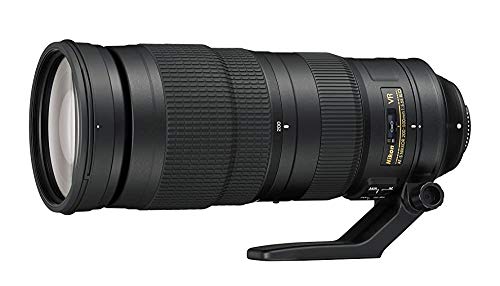
This renewed Nikon 200–500mm f/5.6E VR offers the same optics and performance as the new version at a lower cost. You get the constant f/5.6, dependable VR, and strong sharpness across the zoom range. It pairs well with Nikon DSLRs like the D500, D750, and D850 for wildlife and aviation. Renewed units are inspected and tested for function.
Buying renewed can save a meaningful amount, which you can put toward a better tripod or a gimbal head. Optically, it is still one of the best budget-friendly super-telephoto zooms for Nikon F-mount. If you want reach, consistency, and savings, this is a logical move. Consider it a workhorse for the field.
Pros:
- Great price-to-performance ratio
- Constant f/5.6 and good VR
- Strong sharpness at 500mm
- Well-matched to D500 and D850 tracking
- Renewed testing adds peace of mind
Cons:
- Still heavy for travel
- Warranty terms may differ vs. new
- Supply varies; availability can be spotty
My Recommendation
If you want the best wildlife lens for DSLR value in Nikon F-mount, the renewed 200–500mm is hard to beat. It is best for shooters who need pro-looking results but want to keep costs in check. Put savings into support gear and memory cards. It is a field-proven zoom that earns its spot in many kits.
| Best for | Why |
|---|---|
| Value hunters | Renewed price with flagship-level reach |
| Action and birds | Consistent AF and sharp 500mm |
| Mixed lighting | VR helps stabilize hand-held shots |
Nikon F 420-800mm f/8.3 Manual Telephoto
This 420–800mm f/8.3 manual lens is a budget super-tele for Nikon F-mount DSLRs. It is fully manual with no VR, so plan on tripod use. You set focus by hand and shoot in M or A modes. The draw is huge reach for static or slow-moving wildlife without spending big.
It can deliver decent images with careful technique, especially in bright light. It is not a match for Nikon’s pro glass in contrast, color, or speed. Yet for learning and occasional long-distance shots, it can be a fun tool. If you accept the trade-offs, the price-to-reach ratio is compelling.
Pros:
- Extremely long reach for little money
- Works on many Nikon FX/DX DSLRs
- Teaches manual focus discipline
- Light for the focal length
- Good for moon and perched birds
Cons:
- No VR and no autofocus
- Dark aperture; needs bright conditions
- Variable quality; technique dependent
My Recommendation
If you want the best wildlife lens for DSLR reach on a shoestring for Nikon, this manual 420–800mm is a starter option. It is best for patient shooters who enjoy manual work. Use a solid tripod, faster shutter speeds, and live view magnification for focus. It can fill the frame when distance is the only way to be close.
| Best for | Why |
|---|---|
| Budget super-tele | Longest reach per dollar |
| Static subjects | Manual focus is manageable when animals hold still |
| Learning tool | Builds focusing and stability skills |
JINTU 420-1600mm f/8.3 Manual for Canon EF

The JINTU 420–1600mm kit pushes reach even further, often using a 2x extender to hit 1600mm. It is manual focus, manual exposure, and has no stabilization. You will need a sturdy tripod and patience. For moon shots and far-off wildlife, that reach can be exciting.
Image quality is best at the 420–800mm range; expect softness at 1600mm. Still, with steady support and bright light, it can capture scenes that are impossible with shorter lenses. It is a niche tool, but it fills that niche well for a low price. Treat it as a specialist lens for specific tasks.
Pros:
- Insane reach up to 1600mm
- Very affordable for the focal length
- Works on many Canon EF/EF-S DSLRs
- Fun for moon and distant wildlife
- Lightweight for what it does
Cons:
- Manual focus and no IS
- Softness at extreme focal lengths
- Needs bright light and a solid tripod
My Recommendation
If your goal is maximum reach on Canon without big spending, this is a quirky yet useful option for the best wildlife lens for DSLR on a budget. It is best for distant, slow subjects in bright light. Keep expectations realistic, use the lower end of the zoom, and work on technique. It can make images that shorter glass simply cannot.
| Best for | Why |
|---|---|
| Extreme distance | 1600mm with converter for far subjects |
| Moon photography | Long focal length fills the frame |
| Budget birding | Low cost to try super-telephoto shooting |
Canon EF 75-300mm f/4-5.6 III Kit

This Canon EF 75–300mm III is a classic budget telephoto. It is light, simple, and works on Canon EF and EF-S DSLR bodies. Autofocus is decent in bright light, and 300mm reach covers many wildlife scenes. The kit extras, like the bag and 64GB card, add starter value.
There is no image stabilization, so you need faster shutter speeds. Sharpness is fine at 75–200mm and acceptable at 300mm with careful technique. It is a good daylight lens for casual wildlife and sports. If you are new to long lenses, it is an easy first step.
Pros:
- Very affordable entry telephoto
- Lightweight and easy to carry
- Works on Canon full-frame and APS-C DSLRs
- Kit adds useful accessories
- Good daylight performance for the price
Cons:
- No image stabilization
- Soft at 300mm without fast shutter speeds
- AF can hunt in low light
My Recommendation
If you want the best wildlife lens for DSLR under a tight budget for Canon, this is a simple, honest lens. It is best for daytime wildlife, zoo trips, and kids’ sports. Keep shutter speeds high and ISO reasonable for sharp images. It teaches you how to handle telephoto reach without the cost.
| Best for | Why |
|---|---|
| First wildlife lens | Low price and simple operation |
| Daylight outings | Performs better with lots of light |
| Travel light | Small and easy to pack |
Nikon 55-300mm f/4.5-5.6G DX VR (Alt)

This is another listing of the Nikon AF-S DX 55–300mm VR, a top budget telephoto for DX DSLRs. It covers wildlife basics with VR and quiet autofocus. The focal range is flexible for parks, trails, and travel. On a D3xxx or D5xxx, it is a perfect match.
Expect solid center sharpness and fair edges, especially when you stop down. At 300mm, use higher shutter speeds for best results. The lens is light and won’t weigh you down on hikes. It is a sensible choice when cost and convenience matter.
Pros:
- Great value for wildlife beginners
- VR helps steady slower shots
- AF-S works across Nikon DX bodies
- Compact and backpack-friendly
- Useful 55–300mm range
Cons:
- Not as sharp at 300mm
- Plastic feel and basic sealing
- AF slows in dim light
My Recommendation
If your goal is the best wildlife lens for DSLR at a beginner price for Nikon DX, this reaffirms the 55–300mm as a smart buy. It is best for hikers, travelers, and learners. Use VR wisely, shoot in good light, and mind your shutter speed. It rewards good habits with pleasing wildlife images.
| Best for | Why |
|---|---|
| Budget Nikon DX | Low price with VR and AF-S |
| Travel wildlife | Light, discreet, and long enough |
| Learning telephoto | Forgiving lens to build technique |
Canon 420-800mm f/8.3 Manual (Black)

This black-finish 420–800mm manual telephoto for Canon EF/EF-S is similar in concept to other T-mount super-teles. It offers big reach at a tiny price. You get manual focus and manual exposure, with no electronic contacts. A tripod and bright light are your friends here.
Focus takes practice, but results can be rewarding with static wildlife. It is a good way to try long-lens work before investing in premium glass. Colors and contrast are serviceable, and you can boost them in post. For the cost, it opens doors to distant subjects.
Pros:
- Long reach on a minimal budget
- Works with Canon EF and EF-S DSLRs
- Light for the focal range
- Solid for perched birds and landscape details
- Good learning platform
Cons:
- No AF and no stabilization
- Narrow aperture limits low light
- Optics are adequate, not premium
My Recommendation
If you need reach-first and price-first, this is a low-cost path toward the best wildlife lens for DSLR if you accept manual operation. It is best for stationary wildlife and distant scenes in daylight. Start at 420–600mm for better sharpness, and lock your tripod. It is a practical stepping stone to longer, faster glass later.
| Best for | Why |
|---|---|
| Budget reach | 800mm without high cost |
| Static subjects | Manual focus more manageable when animals pause |
| Skill building | Forces good technique and planning |
Nikon 70-300mm f/4-5.6G

The Nikon 70–300mm f/4–5.6G is an older, ultra-light telephoto. It has no VR and uses the camera’s AF motor, so autofocus will not work on bodies without a built-in motor (like D3xxx/D5xxx). It is still a cheap way to reach 300mm on compatible DSLRs. In bright daylight, it can capture decent wildlife moments.
Keep shutter speeds fast to fight shake. Image quality is best in the middle of the range; performance at 300mm is adequate for casual use. If your body supports AF, it is a low-cost tool for learning technique. If not, expect manual focus only.
Pros:
- Very light and easy to carry
- Low price for 300mm reach
- Works on many Nikon F-mount DSLRs
- Good in bright light with proper settings
- Slim form factor fits small bags
Cons:
- No VR for stabilization
- Relies on body AF motor; no AF on D3xxx/D5xxx
- Soft at 300mm and in low light
My Recommendation
If your camera supports screw-drive AF and you want the cheapest path to wildlife reach, this can be the best wildlife lens for DSLR on a very tight budget. It is best for sunny-day safaris, zoos, and backyard wildlife. Use high ISO and fast shutter speeds to avoid blur. Consider it a stepping stone to VR-equipped lenses later.
| Best for | Why |
|---|---|
| Budget Nikon FX/DX with AF motor | Low cost if your camera can drive AF |
| Daylight wildlife | Works best in bright conditions |
| Travel light | Very portable and simple |
FAQs Of best wildlife lens for DSLR
What focal length is best for wildlife on a DSLR?
For most wildlife, 300–500mm is ideal. On APS-C/DX, 200–500mm gives huge reach. Birds often need 400mm or more.
Do I need image stabilization for wildlife?
It helps a lot. At 300–500mm, stabilization reduces blur from hand shake. It also helps with framing and tracking.
Is a zoom or prime better for wildlife?
Zooms are flexible for changing distance. Primes are sharper and faster but cost more. Many shooters start with a 200–500mm zoom.
Can I use manual-focus super-telephoto lenses?
Yes, with careful technique. Use bright light, a tripod, and live view magnification. They are budget-friendly, but take practice.
What’s the best wildlife lens for DSLR on a budget?
For Nikon, the 55–300mm DX VR is great. For Canon, the 75–300mm is a start. Manual 420–800mm lenses offer cheap reach with trade-offs.
Final Verdict: Which Should You Buy?
Want the best wildlife lens for DSLR with speed, reach, and reliability? Pick the Nikon 200–500mm f/5.6E VR for its sharpness and steady performance. It balances cost with pro-level results.
On a budget, choose the Nikon 55–300mm DX VR or Canon 75–300mm for daylight. Need extreme reach? The manual 420–800mm or JINTU 420–1600mm can work with practice.

