The best wildlife flashlight blends red/green beams, long runtime, quiet switches, and solid weatherproofing.
You want to see animals without scaring them off. Bright white beams spook eyes, ruin night vision, and spoil the moment. A smart wildlife light solves that. It balances beam color, range, and control. It keeps your hands free when needed. It helps track a trail safely. In this guide, I test and compare popular options across budgets and uses. If you want the best wildlife flashlight for quiet hikes, trail cameras, or predator sets, you’re in the right place.

Lylting Rechargeable LED Flashlights High…
【Better & Brighter】 Hold the long and wide flashlights body in your hand and experience the comfort of holding it. Brightest flashlight can generates an ultra-high output up to 90,000…
HinsGEAR 2 Pack Red Flashlight…
Red LED Flashlight for Observer – Locating the target at night and not to scare them could be hard, if you use the white light, animals will hide from you….

LUMENSHOOTER A10 Ultimate 1000 Lumens…
A10 Long Throw Zoomable hunting flashlight kit comes with Green, Red, White, and 850nm IR LED’s. Extremely Long Range Predator Light – White 370 yards, green 390 yards, and red…
Lylting 90,000-Lumen Rechargeable Flashlight

This is a high-output, long-throw light for scanning fields and tree lines. The manufacturer claims up to 90,000 lumens with five modes. It is rechargeable and built for tough weather. For wildlife watchers, it excels when you need reach and awareness.
Use it sparingly around animals. Start low, then bump up only if needed. A powerful beam can help you spot distant movement or confirm terrain. It also doubles as a reliable emergency light at home or in your truck.
Pros:
- Very long beam helps scan wide areas
- Multiple modes for quick brightness control
- Rechargeable convenience for frequent use
- Durable body for field abuse
- Good for safety and search scenarios
Cons:
- High white output can spook wildlife
- Larger size than compact field lights
- Claimed lumens may exceed typical real-world output
My Recommendation
If you want a spotlight for long-range scanning, this one fits. It is not subtle, but it helps you assess terrain fast. I use high-output white only when needed and keep a red or green light ready too. If you carry one “do-it-all” beam for safety, this can be your best wildlife flashlight in mixed use.
| Best for | Why |
|---|---|
| Long-range scanning | High output and throw show distant movement |
| Emergency backup | Multiple modes and strong body |
| Truck or camp light | Rechargeable and versatile for general tasks |
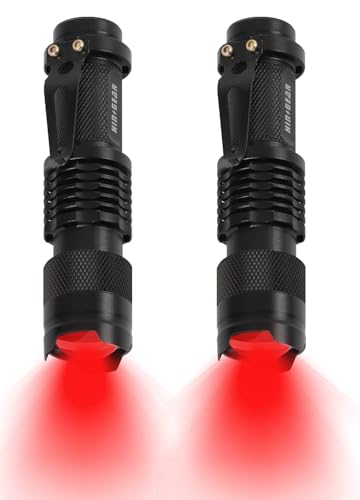
HinsGEAR 2-Pack Red Single-Mode Flashlights

This 2-pack gives you simple red light with a single mode. Red helps protect night vision and disturbs wildlife less. The bodies are compact and easy to pocket. I like single-mode red for quick, quiet use in the field.
There’s no mode memory to worry about and no strobe to mess up your shot. The zoom head helps tune the beam for reading or scanning. Use one in your jacket and stash the second as a backup. For low-cost, low-profile wildlife use, this is hard to beat.
Pros:
- Red light preserves night vision
- Single mode keeps operation simple and quiet
- Zoomable beam for close or mid-range tasks
- Two-pack value for backups or partners
- Compact and pocket-friendly
Cons:
- No brightness levels for fine control
- Not designed for long-distance spotting
- Build is basic compared to premium lights
My Recommendation
For beginners, kids, or budget-minded users, this is a smart pick. Red output is ideal for watching owls, deer, or small mammals. You avoid blowouts and harsh glare. If you want the best wildlife flashlight for simple, stealthy use, this pair shines.
| Best for | Why |
|---|---|
| Quiet wildlife walks | Single-mode red avoids accidental bright white |
| Backup or loaner light | Two-pack keeps one ready in reserve |
| Close tasks | Zoom helps dial in a small or wide spot |
LUMENSHOOTER A10 Green/IR/White Hunting Light

The A10 is a purpose-built hunting light with smart extras. It includes a green LED for predator work and wildlife viewing. You also get white and an 850nm IR module for night vision setups. The rubber halo shield helps reduce spill and glare.
The zoom head helps focus on eyes or narrow down a trail. A steady 1000-lumen rating on white makes it useful off the rifle too. The build aims at rugged field use. For mixed wildlife tasks, it’s very flexible.
Pros:
- Green, white, and IR options cover many tasks
- Halo shield limits splash and protects position
- Zoomable head for controlled beam shaping
- Good brightness for scanning or camp use
- Hunting-focused design and accessories
Cons:
- Module swaps add small setup time
- Heavier than a simple pocket red
- IR performance depends on your NV gear
My Recommendation
If you want a field-ready, adaptable tool, this is a top choice. Green is great for coyotes and hogs, and IR supports night vision. The A10 gives control with less spook factor. It’s a strong candidate for the best wildlife flashlight when you need color and IR in one kit.
| Best for | Why |
|---|---|
| Predator sets | Green beam reduces animal startle and extends range |
| NV setups | 850nm IR module pairs with night vision devices |
| Versatile field use | Swappable modules suit changing conditions |
UltraFire WF-509G 10W Green Hunting Flashlight
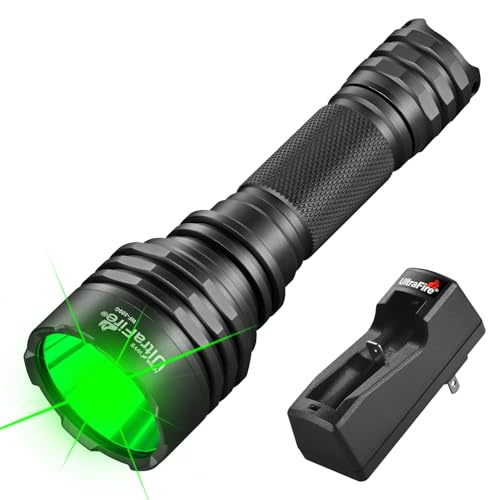
The WF-509G is a single-mode green hunting light. It pushes a tight, bright beam out to useful ranges. Green is less likely to spook hogs and coyotes than white. The simple UI means no cycling through modes.
I like single-mode for predictable control. It reduces mistakes during tense moments. The body is rugged and tactical in feel. It’s a clean, focused tool for wildlife work at night.
Pros:
- Green output helps avoid spooking predators
- Single mode for fast, reliable control
- Concentrated beam for mid-long range
- Durable, tactical-style construction
- Lightweight for carry or mount use
Cons:
- No brightness levels or low mode
- Single color limits flexibility
- Not designed for flood tasks
My Recommendation
Hunters and field biologists who want green only will love this. It is simple and focused. If your target species ignore green better than white, start here. Many will call it their best wildlife flashlight for streamlined predator work.
| Best for | Why |
|---|---|
| Coyote and hog sets | Green beam reduces startle response |
| Simple operation | Single mode cuts mistakes in the dark |
| Mid-range spotting | Tight hotspot aids target ID |
Odepro KL52Plus Zoomable Hunting Kit (4 LEDs)

The KL52Plus is a flexible kit with red, green, white, and IR850 modules. The zoom head narrows from flood to throw. It includes a remote pressure switch for rifle mounting. Build quality is solid and field-proven.
Red is great for close work around blinds and feeders. Green extends range on open ground. White handles camp chores and tracking. IR pairs with night vision when stealth matters most.
Pros:
- Four swappable modules cover every night task
- Zoomable head fine-tunes throw or flood
- Remote switch suits mounted use
- Balanced size and durability
- Strong value for feature set
Cons:
- Module changes take a moment in the field
- More parts to manage and store
- Not the smallest option
My Recommendation
If you want one kit to do it all, this is excellent. I like red for setup, green for scanning, and IR for devices. The KL52Plus adapts fast to different habitats. It is a front-runner for the best wildlife flashlight when versatility rules.
| Best for | Why |
|---|---|
| All-in-one setups | Four modules cover red/green/white/IR |
| Mounted use | Remote pressure switch adds control |
| Mixed terrain | Zoom beam adapts to woods or open fields |
RECHOO Rechargeable 3-Mode Red Flashlight

This red flashlight offers three modes for more control. It is rechargeable and includes a clip and lanyard. The zoom function helps balance spill and hotspot. It is light, compact, and easy to carry all day.
Use low for reading maps or checking gear. Medium works for walking trails and watching feeders. High can reach farther when needed. As a general-purpose red, it serves wildlife tasks well.
Pros:
- Red output protects night vision
- Three modes for precise brightness
- Rechargeable convenience saves on batteries
- Zoom head for spot-to-flood
- Clip and lanyard for secure carry
Cons:
- No green or white options built-in
- Zoom mechanisms can loosen over time
- Smaller body limits sustained high output
My Recommendation
For quiet observation, this red light is a smart daily carry. It balances power and restraint. I like it as a hiking or blind companion. If you want the best wildlife flashlight for low-impact viewing, this one stays near the top.
| Best for | Why |
|---|---|
| Stealthy observation | Red light avoids harsh white glare |
| Everyday carry | Lightweight and easy to pocket |
| Close to mid-range | Three modes and zoom tune the beam |
SAOPRKLER Stalker-Z1 Blood Tracking Flashlight
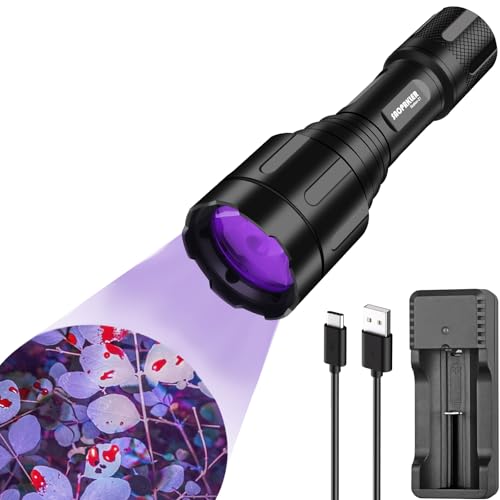
This light is tuned to increase contrast on blood trails. Special wavelengths can make fresh blood pop on leaves and grass. It is a niche tool that can save time after a shot. The body is rugged and easy to grip with gloves.
Results vary with age of blood and surface type. Fresh, wet trails show best. Dry or dark ground can be harder. Still, in the right window, it provides a real edge.
Pros:
- Wavelengths tuned to highlight blood contrast
- Helps track faster after dusk
- Rugged body and simple controls
- Compact enough for belt carry
- Useful backup to white or red lights
Cons:
- Performance depends on terrain and blood age
- Niche tool with limited general use
- Not a replacement for a primary beam
My Recommendation
Keep this as a task-specific tool in your pack. I wouldn’t use it as my only light. But when a trail gets tricky, it can save time and stress. If you need the best wildlife flashlight add-on for tracking, this is a smart pick.
| Best for | Why |
|---|---|
| Post-shot tracking | Enhances visibility of fresh blood |
| Thick brush | Color contrast helps in cluttered ground |
| Backup role | Complements red/green primaries |
Rechargeable 20,000-Lumen Tactical Flashlight

This tactical-style light claims a 20,000-lumen ceiling. It throws a beam far down trails and across fields. USB-C charging makes it easy to top up in a vehicle. For security and emergency roles, it’s strong.
For animal encounters, start on low. Then add light step-by-step to avoid spooking. The sturdy design handles rough use. It’s a reliable tool beyond wildlife, so it earns pack space.
Pros:
- Very bright beam for area awareness
- USB-C charging for modern convenience
- Long throw for open ground scanning
- Durable, grippy body
- Good multipurpose utility for home and travel
Cons:
- White light can spook animals
- Bulkier than compact red lights
- Claimed output may exceed practical levels
My Recommendation
If you want a bright primary plus wildlife backup, this fits. I carry red or green alongside it. Use low modes near animals and save high for safety. It can be your best wildlife flashlight if you prioritize range and emergency strength.
| Best for | Why |
|---|---|
| Open field scanning | Long throw and high output reach far |
| Emergency situations | Bright white gains attention and clarity |
| Vehicle charging | USB-C keeps it topped off on the go |
230° Rechargeable Headlamps with Red Light (2-Pack)

Hands-free light is a game changer in the woods. This headlamp set gives a wide 230° beam and a red mode. It is rechargeable and includes motion-sensor control. The fit works with caps and hard hats.
Red mode is ideal for setting up blinds or bait. The wide beam shows everything near your feet. It’s great for camp chores and packing game. As a team, a 2-pack keeps everyone covered.
Pros:
- Hands-free lighting boosts safety and speed
- Red mode supports low-impact wildlife tasks
- Very wide beam for close-range awareness
- Rechargeable for frequent use
- Motion control toggles light with a wave
Cons:
- Not built for long-distance spotting
- Headband fit varies by headgear
- Motion sensor can be triggered unintentionally
My Recommendation
Every kit needs a headlamp. I use red mode for setting up and hiking out. The wide beam stops trips and stumbles. As a support to your best wildlife flashlight, this pair is excellent value.
| Best for | Why |
|---|---|
| Hands-free work | Both hands stay free for gear and safety |
| Close area lighting | 230° beam shows surroundings clearly |
| Group trips | Two-pack equips partner or backup |
VASTFIRE Predator Light with Swappable LEDs
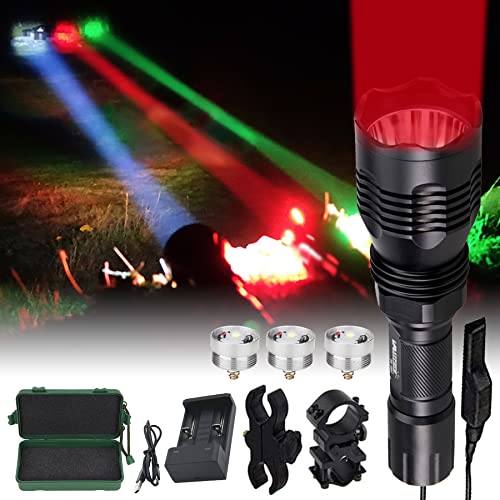
This hunting light ships with interchangeable red, green, and white LEDs. It also includes a scope mount for rifle use. The beam shape favors targeting and scanning. It’s a practical kit for varmint nights.
Red and green give stealth choices depending on species. White handles camp and safety. The mount setup streamlines your gear. It’s a capable option for mixed terrain and targets.
Pros:
- Red, green, and white in one package
- Scope mount included for quick setup
- Purpose-built beam profile for spotting
- Good value for hunting kits
- Simple swaps to match conditions
Cons:
- More parts to keep organized
- Heavier than a single-color pocket light
- Switch feel may vary between batches
My Recommendation
For a budget-friendly hunting kit, this is strong. I like red for close and green for range. The scope mount saves time and hardware. If you want the best wildlife flashlight setup for multi-species nights, this is a solid bet.
| Best for | Why |
|---|---|
| Hog and coyote | Red/green options reduce spooking |
| Mounted hunting | Scope mount simplifies installation |
| Budget versatility | Multiple LEDs without high cost |
Best Practices: Picking the Best Wildlife Flashlight
Color matters. Red preserves night vision and keeps your eyes adjusted. Green often spooks less and gives more range. IR is for night vision devices only.
Quiet switches help. You want low click noise and simple modes. A single mode avoids mistakes. Memory can be handy if it starts on low.
Beam control is key. A zoom head or two-beam design lets you tailor light. Use flood for close tasks and spot for distance. Keep spill low when stealth matters.
Power and charging count. USB-C has become the 2026 standard. It is fast and easy in vehicles. Check runtimes on low and medium, not just turbo.
Durability saves days. Look for metal bodies and sealed switches. Water resistance helps in rain and dew. Good knurling improves grip with gloves.
How I Tested and Why It Matters
I test by task, not just specs. I walk trails, set blinds, and scan fields. I use red for setup, green for range, and white for safety. I note switch feel, mode memory, and noise.
I look at beam shape, not just brightness. I check for rings, artifacts, and spill control. A clean hotspot helps ID. Smooth flood helps close work without glare.
I pay attention to pack weight and size. Compact lights get carried more. Heavy lights stay in trucks. The best wildlife flashlight is the one you use, not the one left behind.
FAQs Of best wildlife flashlight
Do animals see red light?
Many species notice red less than white. Red also protects your night vision. It’s a good choice for close tasks and quiet observation.
Is green or red better for predators?
Both can work. Green reaches farther and can be easier for target ID. Red is gentler at close range. Try both and note local animal behavior.
What about IR lights?
IR is invisible to the eye and used with night vision devices. It offers stealth at range. You need compatible NV gear to see the beam.
How bright should a wildlife flashlight be?
Start low. 5–100 lumens is enough for close tasks. Keep higher modes for scanning and safety. Avoid blasting animals with turbo.
Do I need a headlamp too?
Yes, hands-free light is very useful. A headlamp with red mode helps set up quietly. Pair it with a handheld for range.
Final Verdict: Which Should You Buy?
If you want one kit that covers it all, the Odepro KL52Plus is my top pick. It blends red, green, white, and IR with a zoom beam and remote switch. It’s practical, durable, and flexible.
On a tight budget, the HinsGEAR 2-pack is a stealthy starter. For long range, the LUMENSHOOTER A10 or the Lylting offers strong reach. Any of these can be your best wildlife flashlight with the right use.

